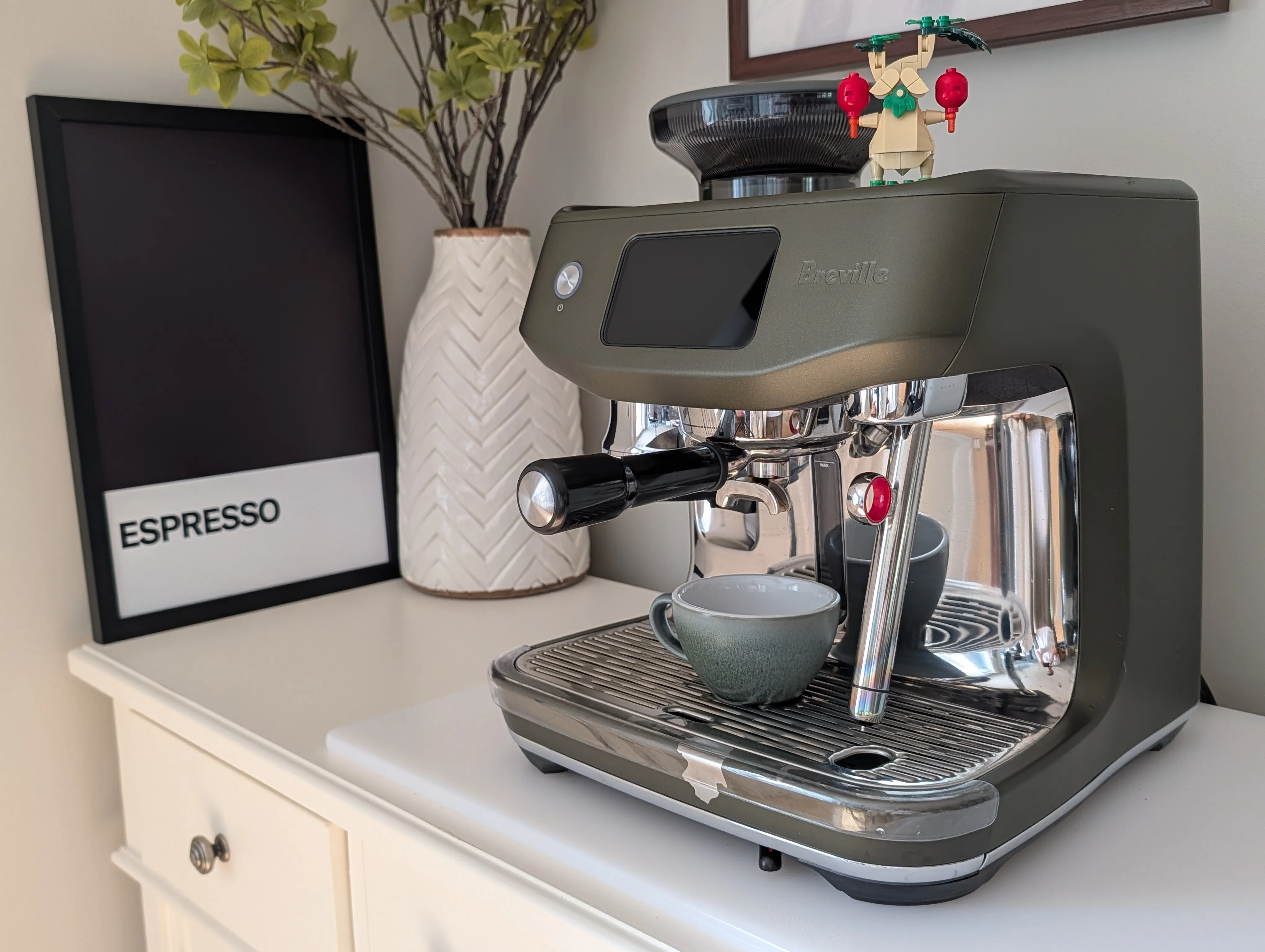
Breville Oracle Jet Review
An automatic that I thoroughly enjoy using. Everything works, and produces better espresso than superautomatics.
This review was conducted on a factory-new unit. Performance metrics and observations are based on real-world testing with various coffee beans and recipes.
This site is 100% ad-free and always will be. This particular review was not sponsored. Purchases made through our links may earn a commission, supporting testing and content creation.
Full Review
Breville’s Oracle lineup sits at the top of its home-espresso range—above familiar names like the Bambino and Barista Express. The Oracle Jet lands in the premium sweet spot: not the most expensive Breville (that’s the Oracle Dual Boiler, about $1,000 more), but at $1,999 it’s still a true luxury purchase for most people.
At first glance, the large touchscreen suggests a superautomatic—press a button and let the machine do everything. The Jet is a little different. It automates the fiddly parts (grinding, dosing, distributing, and tamping) but keeps the hands-on steps many people actually enjoy: locking in the portafilter, pulling the shot, and finishing the drink with milk (which can also be automated).
That mix makes the Jet tricky—and interesting—to judge. For the same money, you can build a dream “separate grinder + separate machine” setup. So the real question isn’t whether the Jet can make great espresso (it can), but whether its streamlined, low-friction workflow is what you want compared to a more flexible, enthusiast-style setup.
Let’s take a closer look at what the Oracle Jet offers.
Unboxing & Setup
The process of getting the Oracle Jet up and running is unlike any other machine we’ve reviewed to-date.
The front of its box uses design language that matches its luxurious price tag. Lifting the top flap reveals a tray containing the included portafilter, milk jug, single-shot basket, water filter, and cleaning products.
The included knock box is as appreciated as it is interesting. There’s not many other espresso machines out there that come with a knock box.
What really sets the unboxing experience apart comes thanks to the Oracle Jet’s touch screen. Once turned on, you’re led through the setup process using a series step-by-step instructions and animations.
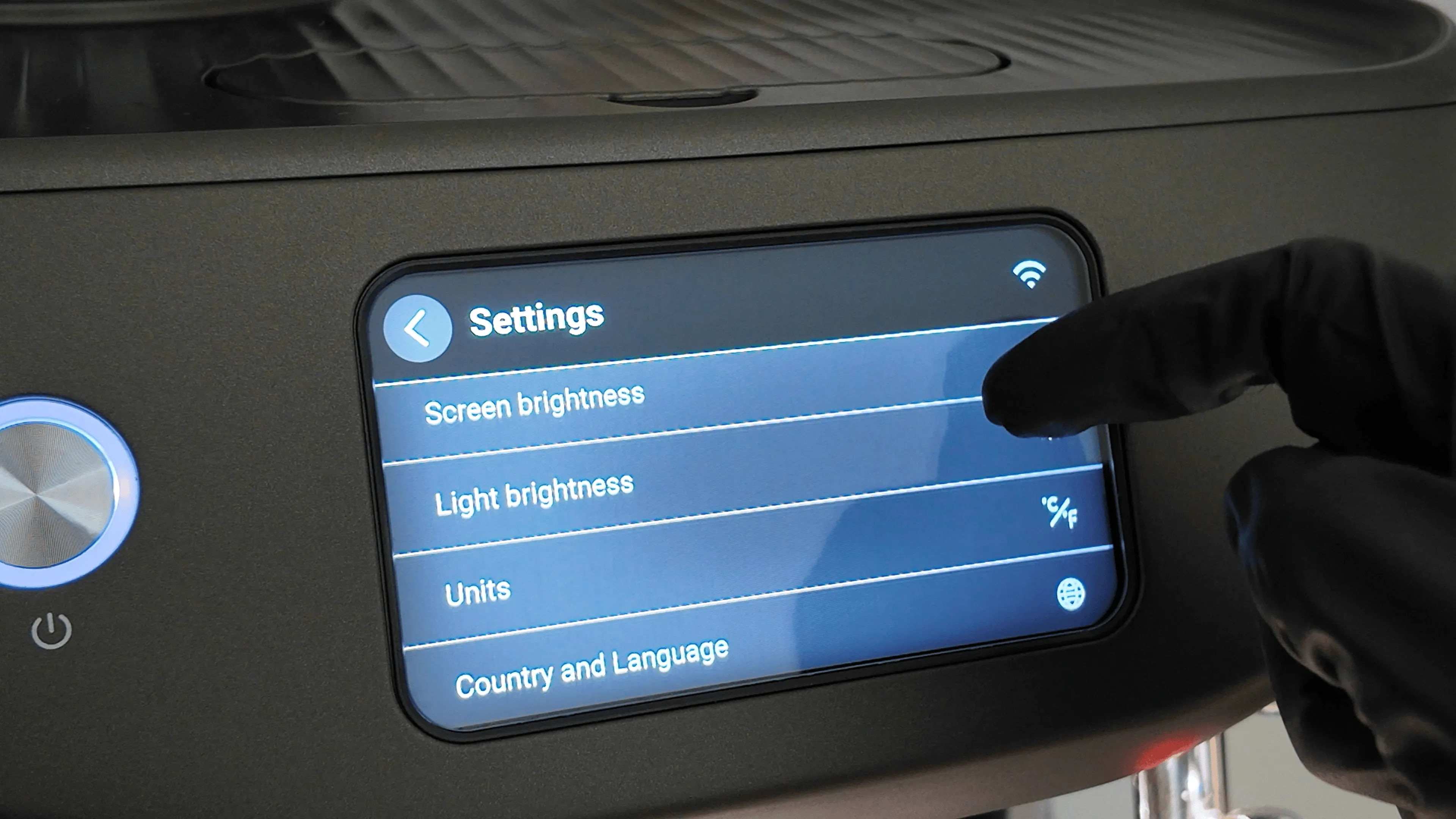
There’s something so nice about setting up a device like this without having to refer back to a separate guide or set of videos, or to worry that you may have missed something.
Combined with the automated puck prep and milk foaming that awaits once it’s set up, there is close to zero friction between unboxing the Oracle Jet and making your first cup of coffee.
Design
The Oracle Jet shares the same rounded corners and metallic finish that we’ve come to expect from the Breville family, but what sets it above the rest of the pack is the quality of the materials and its focal point, the touch screen.
There’s hardly a scrap of plastic here, and as you’d hope for a machine at this price its body consists mainly of stainless steel.
It looks and feels heavy duty, and it’s worth noting that this is a heavy machine, weighing in at over 27 pounds. And boy do I love that. After testing a few entry-level machines lately, it’s crazy how much I value being able to tighten a portafilter without holding onto the whole unit with my other hand. I’m realizing this is a big preference in my personal workflow.
A quick warning about your placement, though. I first placed this on a lightly sealed bamboo work surface which left visible marks. Between the weight and vibration during use, the rubber feet leave imprints. I doubt it would be a problem on most countertops though.
A lever under the drip tray locks and unlocks the Oracle Jet so it can be wheeled around to get at the back of the machine, where the water tank can be removed. There’s also a flap at the top that gives you easier access to the water jug if you’re pouring from a jug or a bottle rather than the tap.
The 4.5” touch screen is bright and responsive, and can be set up in light or dark mode. Outside of the single on/off button and grind setting dial, all interaction with the Oracle Jet takes place through the touchscreen.
The $1000-more-expensive Oracle Dual Boiler gives users the ability to control the machine through an app, and while you may expect similar functionality after giving the Oracle Jet your Wifi password, the connection only exists so the machine can install firmware updates.
The software that powers the touchscreen experience is straightforward and intuitive, and even the most technically-challenged among us are unlikely to get lost on their way to a latte.
The physical workflow of moving the portafilter from the holder beneath the grinder to the group head and foaming milk feels natural.
The 54mm portafilter that comes with the lower-end Breville machines has been upgraded here to a 58mm portafilter. By default, The Oracle Jet produces double-shots of 22g and single-shots of 12g, and if there’s one nit to pick here, it’s that adjusting to something like an 18g dose is a bit tricky, requiring an adjustment of the internal tamper, or swapping out the included basket for a separately-purchased one (but you will probably want to do this anyway - more on that soon).
If you do go the latter route, the Oracle Jet contains hidden storage under the drip tray for cleaning accessories and unused baskets. It’s a clever choice, and it speaks to one of the Oracle Jet’s value adds which we touched briefly on earlier:
Despite being on the larger side at 14.5" deep, 15" wide and 16.7" tall, the clutter that normally goes with a premium coffee setup all but disappears.
The luxury of the Oracle Jet comes down to consolidating the many components of espresso-making into a single device without relinquishing full control to the machine, as you would with a superautomatic.
Features
The Oracle Jet offers a few unique features that deserve a few extra words, but to list off some of what it brings to the table:
- 8 available colors, including Stainless Steel, Black Truffle, Sea Salt, Damson Blue, Almond Nougat, Olive Tapenade, Sea Salt Brass, and Brushed Stainless Steel Brass.
- 2 single-wall baskets for 22g and 12g doses
- 58mm portafilter
- 16.2 oz milk jug
- Breville’s Knock Box 10
- .5 gal/2.3L tank capacity
- 13 included recipes + space for 20 programmable custom recipes
Let’s dive a bit deeper into what makes the Oracle Jet different from options in its class:
Barista Guidance, Automilq and Autoqueue
These are the Breville’s names for the different programs that automate parts of the brewing process.
Before Barista Guidance even comes into play, the Oracle Jet automatically grinds, distributes, and tamps a dose into the portafilter. Once the shot has been pulled, Barista Guidance tracks the shot speed, surfaces a message on the screen indicating whether the shot was too fast or too slow, and suggests an optimal grind setting. This is almost the single best thing about the Oracle Jet. Who among us has not struggled to dial in and wanted someone to just tell us the grind setting that would get us there?
Automilq uses a temperature probe embedded in the steam wand’s tip to foam milk to a specified temperature range. It’s designed to work across dairy and non-dairy milks. While it promises smooth microfoam, experienced baristas may want to take over and use manual mode to get the foam just how they want it, while also being able to watch the temperature on the screen in real time.
Autoqueue is Breville’s answer to a challenge posed by this machine not having a dual boiler (you’ll have to pay an extra $1000 for one of those). Because it can either make espresso or steam milk but not both at once, autoqueue enables you to set up the next drink while finishing the current one. For example, if you have an Americano on the way after making the espresso for a latte, the Oracle Jet will pull another shot and add hot water once the milk for the latte has been foamed.
Thermojet heating system
In lieu of a dual boiler, the Oracle Jet uses the same Thermojet system that powers many of Breville’s other machines, right on down to the bambino.
The Thermojet system heats up almost instantly, meaning less time spent waiting around for your first coffee.
The one drawback here is that the grouphead doesn’t come up to heat and stay hot, something that comes in handy for thermal management (making sure a cold portafilter isn’t cooling the espresso down as it makes its way to the cup).
Breville has installed a thermojet right underneath the grouphead, and the best workaround to solve for this is to use one of the auto-purges (purges can be done for any function by double tapping on the grind, pull, or steam icons) to run hot water through the portafilter before prepping and pulling a shot.
Cold drinks
One feature that the Oracle Jet has that the more-expensive Dual Boiler does not is the ability to make “cold brew” and cold espresso.
The Oracle Jet will grind at a finer setting for cold drinks, and extract over a longer period at a lower temperature.
While the Oracle Jet can’t offer cold foam, or pre-shaken or espresso martinis (one can dream), what it delivers is a less-acidic flavour profile that’s more pleasant in cold espresso drinks.
Burrs and Grind Settings
The Oracle Jet uses a set of 40mm conical steel burrs from Baratza.
Grind size adjustments are made using a stepless dial on the side of the machine, with 45 macro settings that appear on screen.
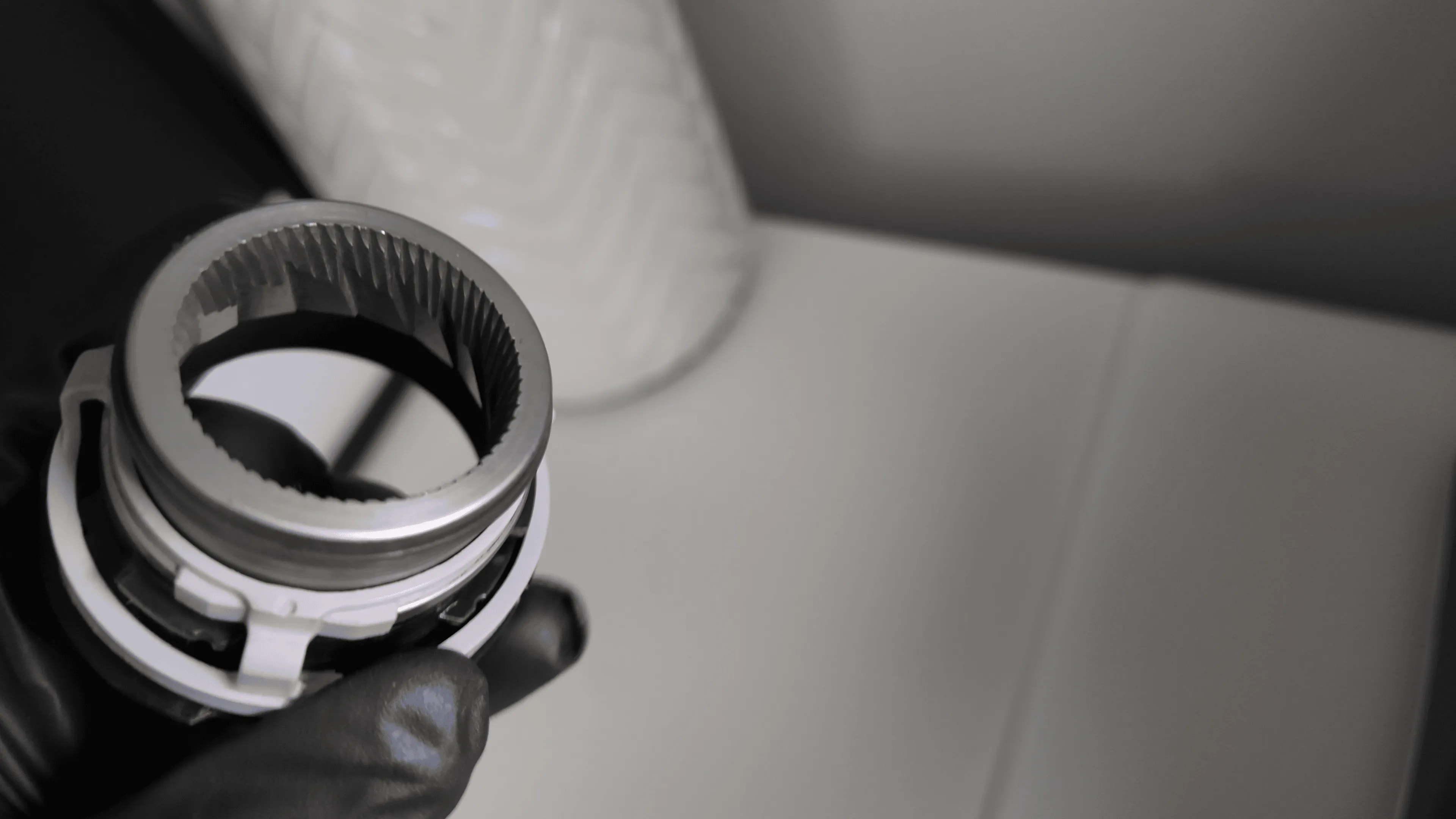
Combined with Barista Guidance, the grind mechanism is more than capable of helping you dial in your shots, but the integrated grinder does lead to an interesting question.
Let’s say you want to experiment with another grinder, something with flat burrs. If you’ve dropped 2 grand on a coffee machine, you can probably afford to do so. The problem is, you’ve already got an integrated grinder in your machine.
For many of us, espresso is an iterative process, you slowly upgrade or swap out the pieces in your setup over time. And while trying to dial in without guidance can sometimes be painful, nailing it after loads of trial and error is a huge part of the fun. For espresso hobbyists who value flexibility and complexity, the Oracle Jet means the end of experimentation, and it’s probably not the right use of $2000.
But there’s still a huge market for those who value great espresso, yet want to eliminate any sort of grinder or coffee bean experimentation - ie, my wife. She just wants it dialed in and as easy as possible in the morning.
So let’s see how it performs for its intended audience - my wife - who just wants a cafe-equivalent espresso with no fuss.
Performance
This is my wife’s daily driver for over a year now, and with the amount of testing I’ve done on this, we’re well over 1,000 shots. I’ll cut to the chase before going deeper. I was shocked by how much I actually like this machine. With a built-in grinder and fully automated tamping, I thought for sure I’d have issues with one of these. But it will grind and tamp shot after shot after shot.
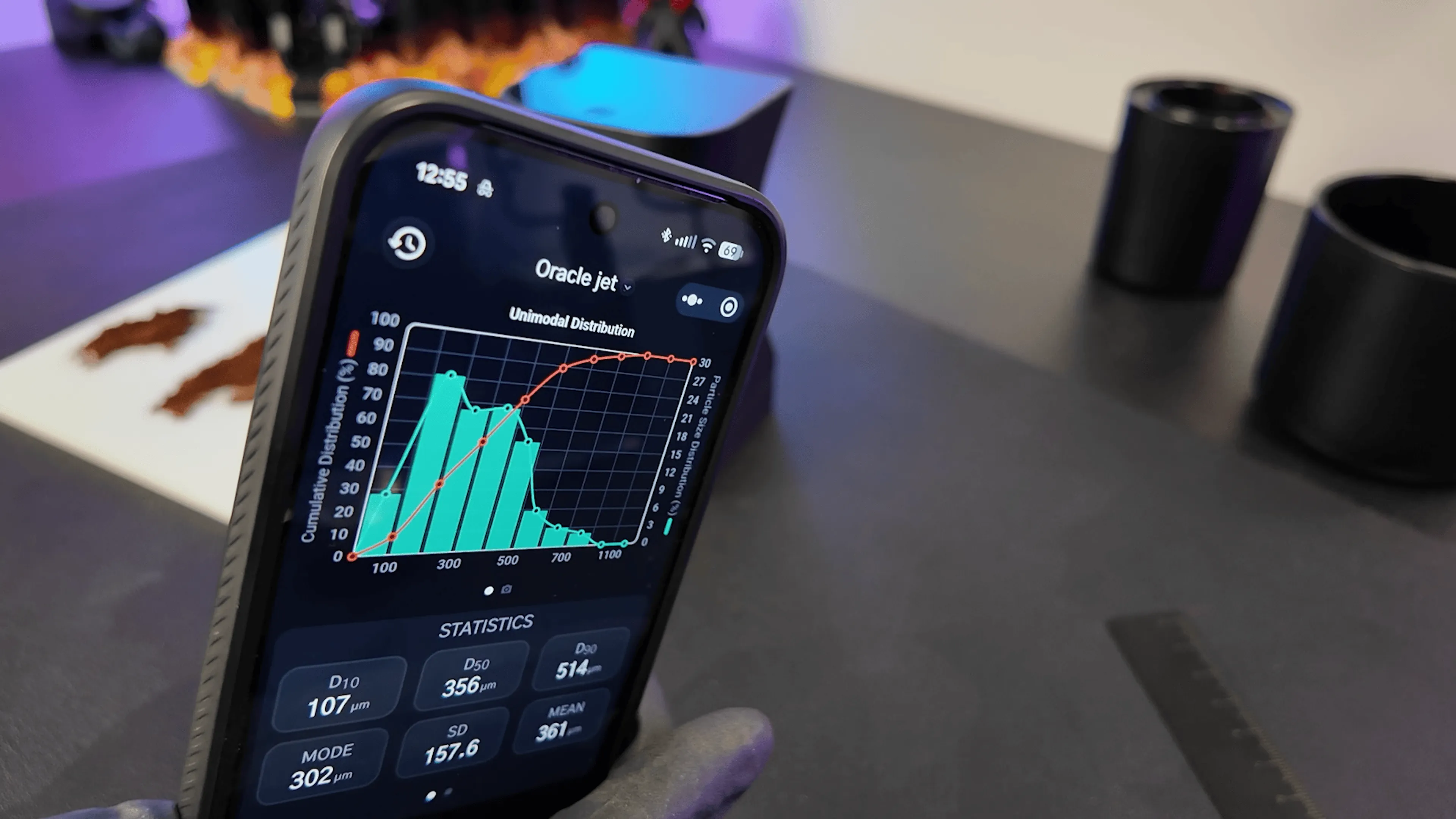
But - and this is a big but. This great performance was achieved with an upgraded IMS high-extraction basket. Let’s talk about that.
Grinding
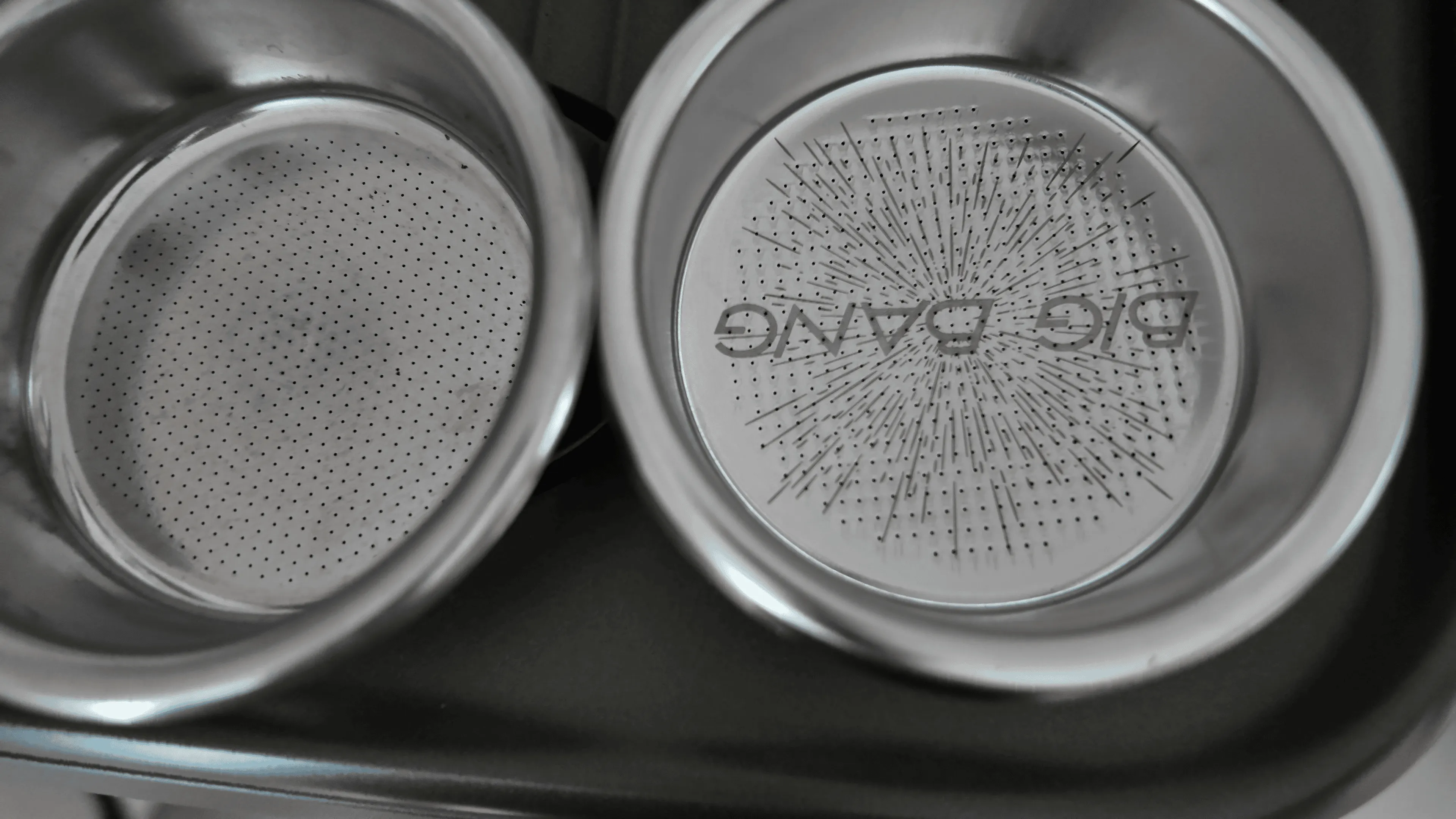
Why I switched to an IMS basket: the stock basket quickly started showing inconsistent tamping. The puck surface looked wavy, as if the grounds weren’t being fully compressed and the whole puck was spinning; I briefly wondered if the tamper was failing. Slightly wetting the basket first helps prevents it from spinning during tamping — but the issue still popped up from time to time.
On top of that, I found myself nearing the upper grind (coarse) limit just to hit a reasonable shot time (using Counter Culture Big Trouble). With the stock basket I was going as high as setting 42, but with the IMS, my sweet spot falls between 36-38. So it let me grind a bit finer while keeping timing in range while also eliminating the tamping inconsistency. That’s probably around 950 shots in a row with this setup. Not a single problem in workflow or wavy grounds.
One other aspect to be aware of is how little head room there is. These pucks are packed in tight after brewing. I’m talking 4-6 wallops against a knock box which can certainly wake a household up bright and early.
Particle Analysis
I pulled coffee ground samples at settings 1, 20, and 45, to use with my particle analyzer, shutting the machine off before tamping started to keep them nice and fluffy. I ran 5 tests per setting, and here are the results.
Oracle Jet Setting | Between-Run Standard Deviation* | Repeatability CV %* |
|---|---|---|
Setting 45 | 14.64 um | 3.23% |
Setting 25 | 19.93 um | 5.11% |
Setting 1 | 7.48 um | 2.09% |
*Bessel’s correction divides by $n-1$ instead of $n$ when calculating standard deviation to eliminate sample bias, giving an honest estimate of the grinder’s true run-to-run variability from a limited number of test runs.
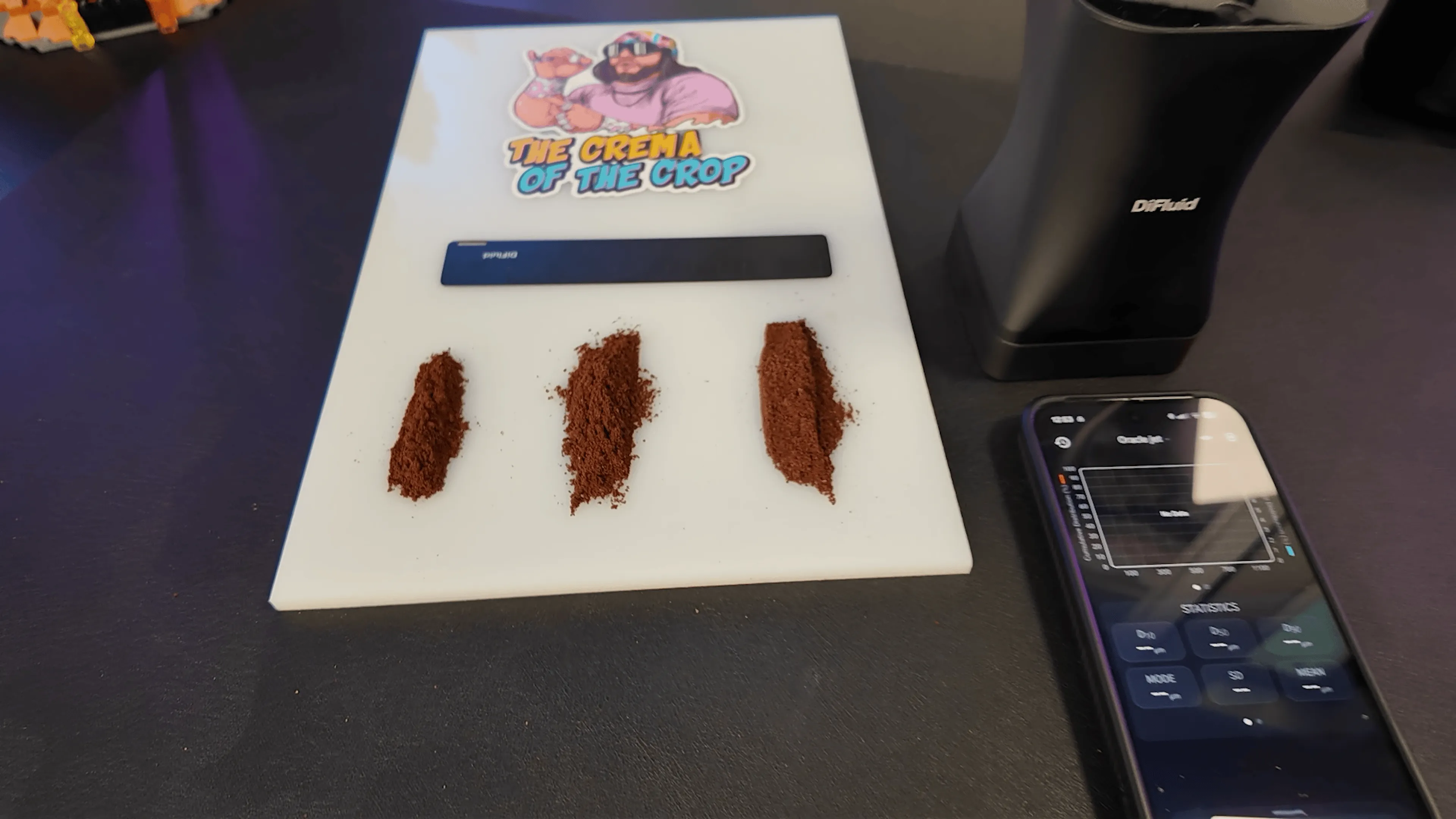
This is absolutely impressive consistency. With a machine that costs 2 grand, it’s a relief the integrated grinder won’t be holding you back - so long as it lasts.
For comparison, here’s the data I pulled from the Baratza Encore ESP, which people often compare the Jet’s integrated grinder to in terms of quality.
Encore ESP Setting | Between-Run SD (s) | Repeatability CV% |
|---|---|---|
Setting 2 | 19.17 um | 4.91% |
Setting 4 | 19.08 um | 5.11% |
Setting 6 | 16.13 um | 4.70% |
Setting 8 | 22.90 um | 6.12% |
Setting 10 | 49.86 um | 11.83% |
Setting 12 | 21.24 um | 4.79% |
The Oracle Jet’s integrated grinder actually out-performed the Baratza Encore ESP in terms of grind consistency! I’ll plan to perform more tests on each of these units in order to get a larger sample size which should give us a more definitive picture.
In the meantime, here’s a few extra data points before we dive into brewing performance.
Brewing
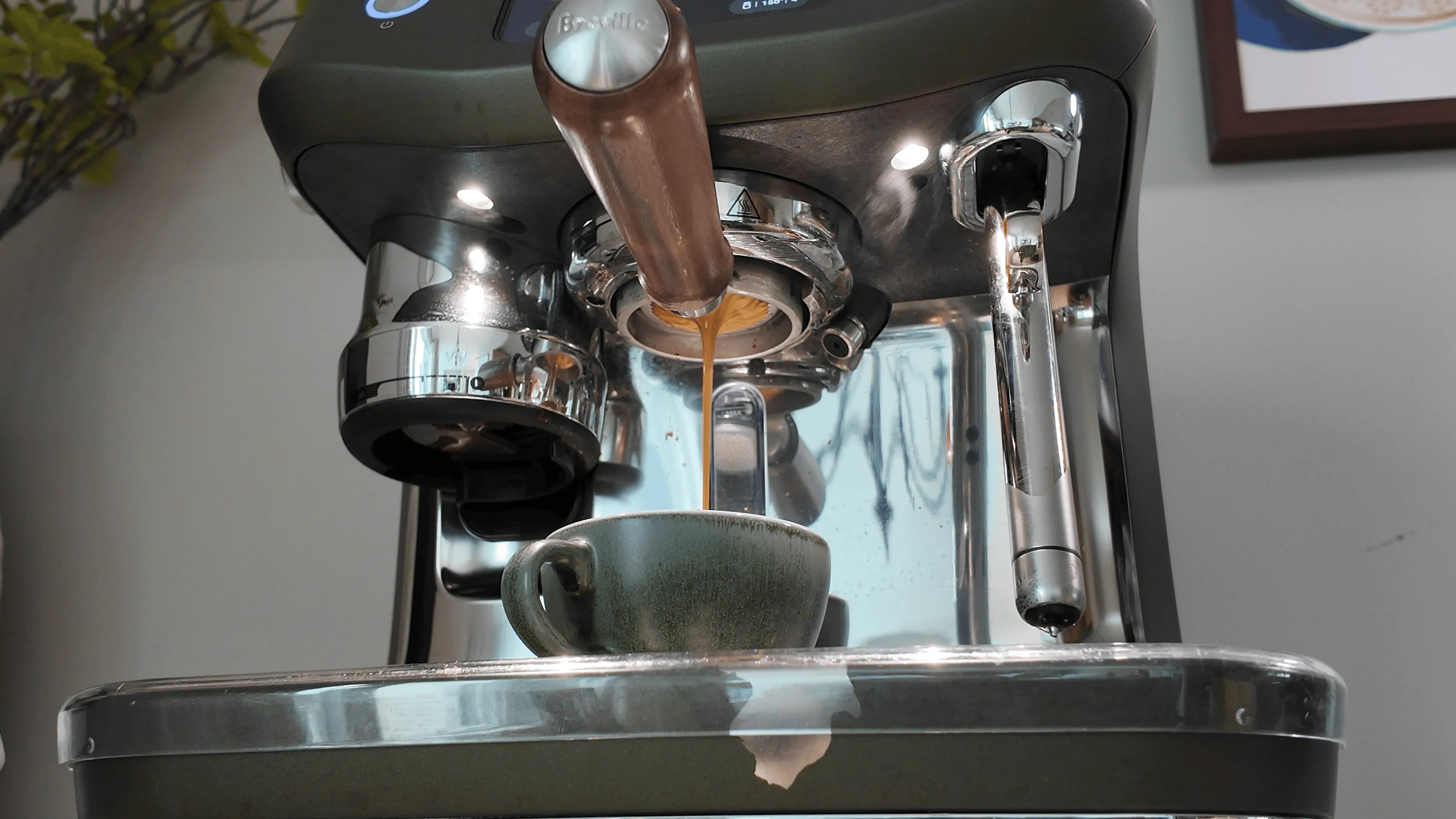
Because of the auto grinding and tamping, I don’t really recommend using a bottomless portafilter since you’re out of control of the prep process. Without having a hand in the prep, it’s hard to know if a shot will suffer from channeling or not. I used a bottomless to test it out, and it did a pretty great job, but every now and then a shot would spray out a bit. I just much prefer having the control and not being surprised. Plus, the included dual spout portafilter that comes with the machine is pretty great.
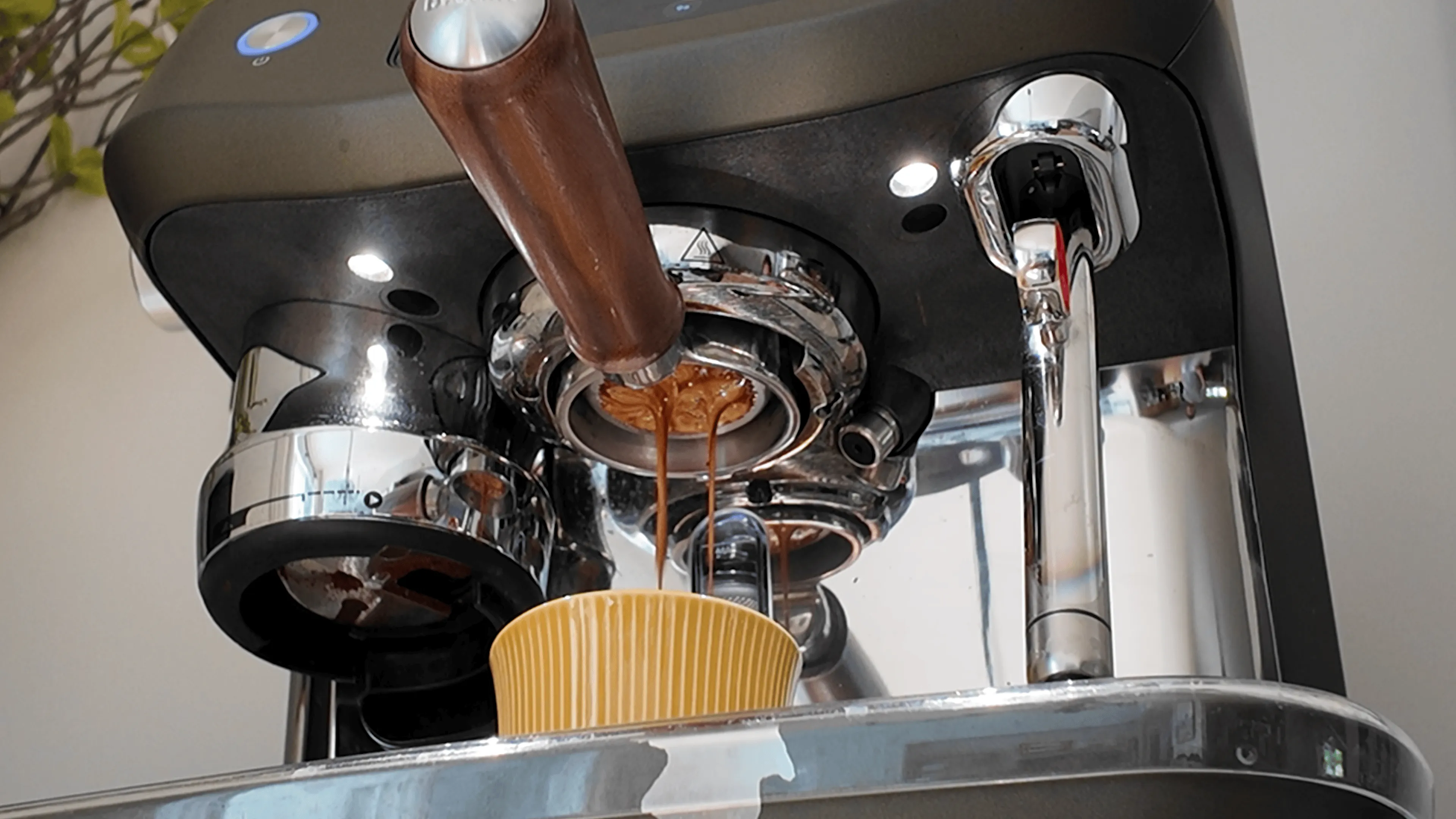
Overall, the brewing performance on the Oracle Jet matches what you’ll find on a few other Breville high-end offerings. It does a fantastic job and my wife really enjoys the cold offerings.
Cold Extraction
The Oracle Jet has the ability to pull a fully extracted espresso shot at cold luke-warm temperature. Body temperature, actually. I measured it at 98F - 102F. So while this is not “cold” per se, it does drastically cut down on the amount of ice that melts when mixing the shot in, resulting in a stronger tasting drink.
The pucks are a bit soupier when using cold extraction, and the shot seems to run for 60 seconds by default - but there’s a significant delay from a long pre-infusion.
The taste is solid over ice, but it’s not something I’d drink as is, especially at the brewed body temperature. But most of you will probably be crafting an iced milk drink, which this works wonderfully for.
Frothing
Auto MilQ (Wife’s Preference)
The automated milk frothing seems to do a better a job when there’s a larger amount of milk in the jug. But if you’re making a single cappuccino, the smaller volume of liquid in the frothing cup reaches temperature quickly, not giving enough time to incorporate and resulting in too many large air bubbles for my liking. My wife, on the other hand, values the convenience way more than the micro-foam bubble size.
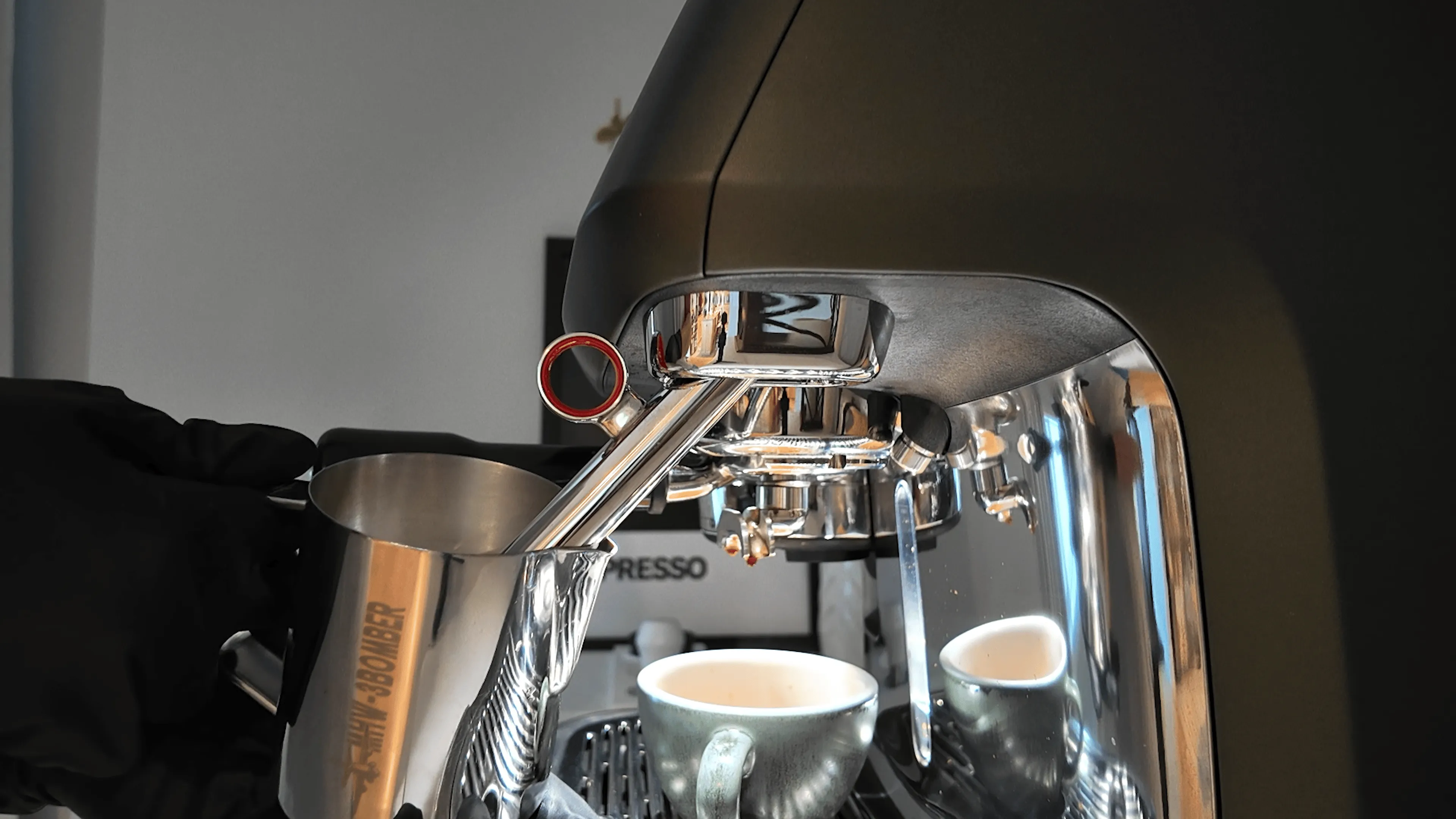
Manual (My Preference)
As for me, I’m flicking the lever into manual mode like we’re hitting 6th gear.
If you're coming from an entry-level machine like the Bambino, manual mode on the Oracle Jet might initially feel less aggressive. And after spending 7x the cost, you might feel concerned. But the reason is because the Bambino’s single-hole tip acts like a pressure washer, blasting steam into the pitcher to force a fast vortex. The Jet on the other hand uses a multi-hole tip that distributes steam volume evenly rather than relying on raw point-velocity. This broader distribution gives you a wider sweet spot for microfoam without the turbulence that leads to accidental surface bubbles.
The Negatives
There’s really not much to dislike about this machine. The output doesn’t taste like it came from an all-in-one. In terms of workflow and performance, these are the only points to call out:
- For Americano’s, the water spout shoots in at an angle, and with some force. This results in some splattering of the espresso. Enough that I’ll usually hold a towel up to catch the splatters.
- Do not add the drip tray to the dishwasher if you have one of the colored machines. I did it one time and the front paint peeled right off.
- The spinning pucks during tamping are a problem unless you upgrade baskets.
Final Verdict
The Breville Oracle Jet makes seriously great espresso with user-friendly automation that simplifies workflow while maintaining many of the elements that make it fun.
If you’re the kind of espresso drinker that loves to tinker and sees themselves spending hours watching grinder reviews even after dropping $2000 on an integrated machine, then maybe the Oracle Jet isn’t for you. But if you’ve got the money to spend and you want frictionless, high-quality espresso, then the Oracle Jet absolutely delivers even at its premium price tag.
Technical Specifications
| Brand | Breville |
|---|---|
| Model | Oracle Jet |