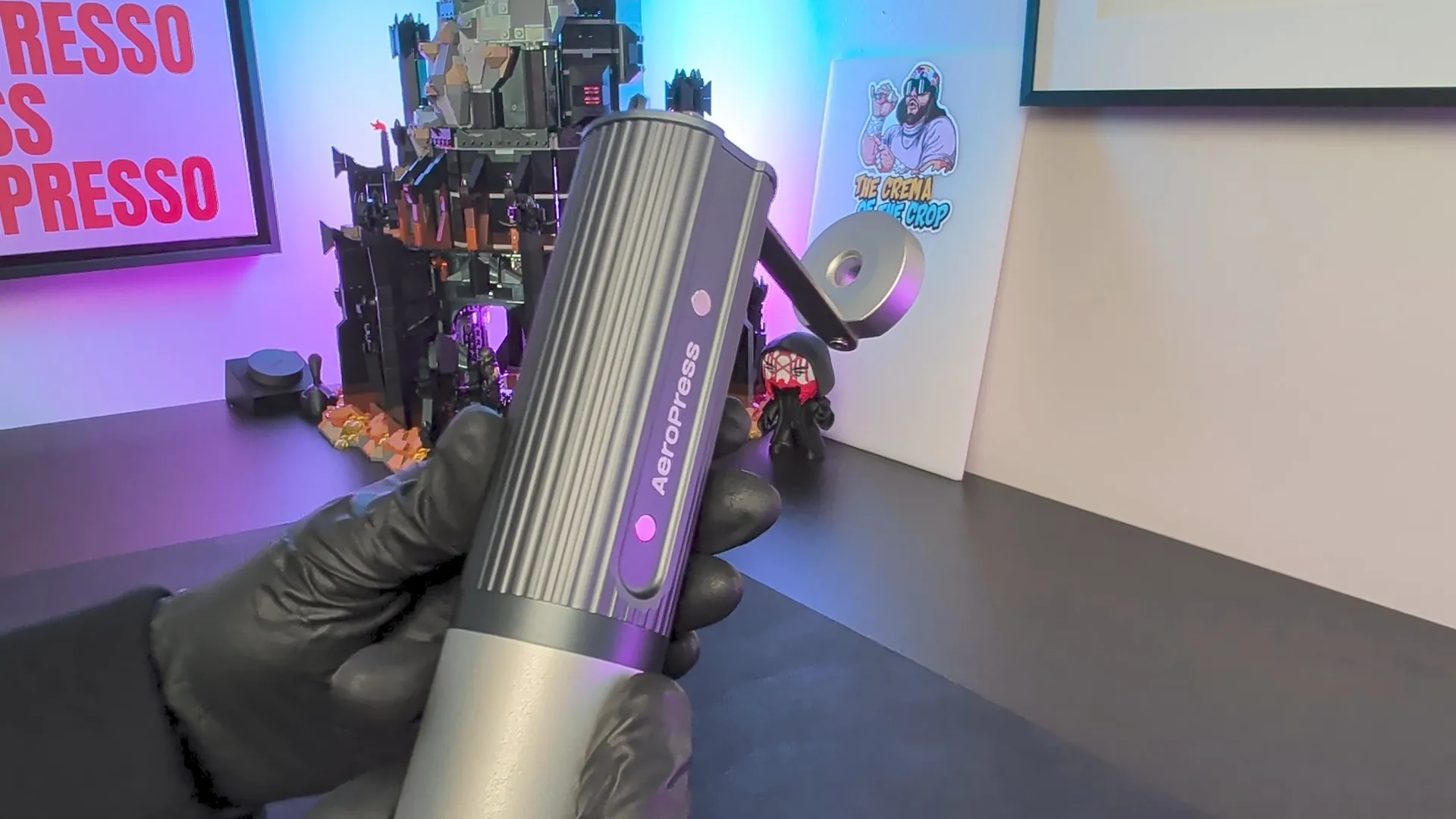
AeroPress Manual Grinder Review and Grind Chart
A premium price tag, some frustrating design choices, and spotty performance mean the Aeropress Manual Grinder can only really be recommended to Aeropress super-fans.
Grind data is captured via DiFluid Omni NIR analysis. I plot the particle distribution across 16+ settings to identify the 'Optimal Zone' for each brew method. Actual results vary based on roast type and freshness, among others; however, it remains a starting point for dialing in.
This site is 100% ad-free and always will be. This particular review was conducted on a factory-new, calibrated unit, and was not sponsored. I purchased this unit for testing purposes. Purchases made through our links may earn a commission, supporting the testing and data acquisition.
Full Review and Benchmark Test
Introduction
The original AeroPress is one of the more beloved inventions in the world of coffee. For a long time, it was the sole member of Aerobie’s coffee-making lineup until around 2021, when it was acquired by Tiny Capital Inc.
Cut to a few years later, and the AeroPress has a growing number of family members: The AeroPress Go, the Go+, the Steel, the Premium build, the XL, and many more.
Into that lineup comes the AeroPress Manual Grinder, designed to fit snugly into an unused AeroPress. Despite the AeroPress-specific form factor, the AeroPress Grinder is advertised as an all-rounder, with 60 grind settings ranging from espresso to french press.
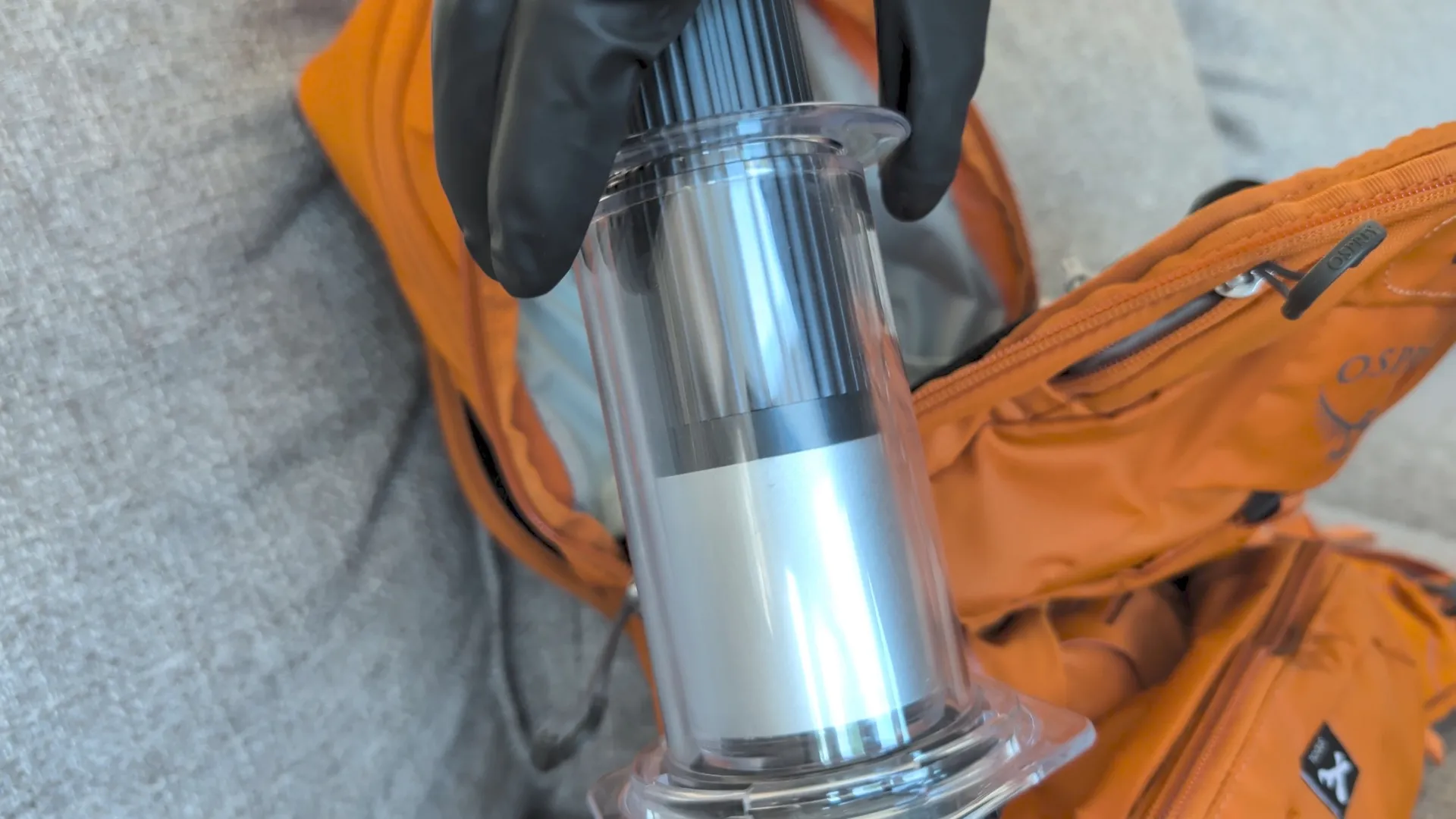
Crucially, it’s priced at $199, $100 more expensive than high-performing hand grinders like the Timemore C3 ESP Pro, and about the same price as serviceable electric grinders like the Baratza Encore ESP. Does the AeroPress Manual Grinder perform well enough to justify its price tag? Or is this a product for AeroPress super-fans only? Let’s take a look.
Features
- All metal-construction
- Designed to fit inside an AeroPress
- 38 mm titanium-coated burrs
- Included drill adaptor for “electric” conversion
- 2x included cleaning brushes
Unboxing
Unboxing the AeroPress Grinder will be a familiar experience for anyone who’s ever purchased an AeroPress. The grinder comes in a similar hexagonal cardboard box to the coffee maker, complete with the same classic font that the company has used since its earliest iterations.
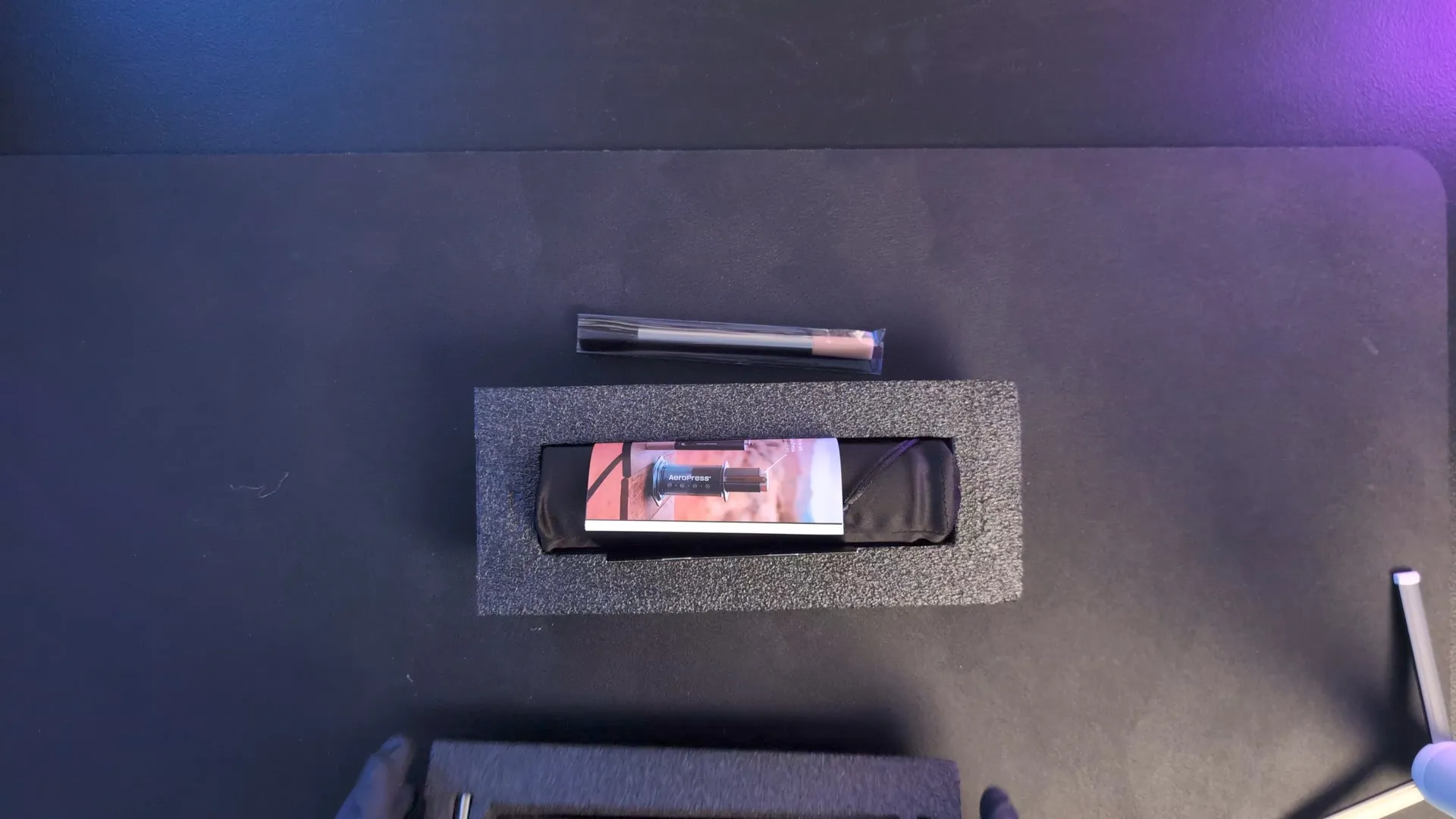
Inside the box is a hexagonal foam clamshell that includes the grinder, wrapped in a thin carrying pouch, two cleaning brushes (one with a long handle and a shorter detail brush with a finger-width hole in the handle), a set of instructions, and an adaptor so the grinder can be used with an electric drill.
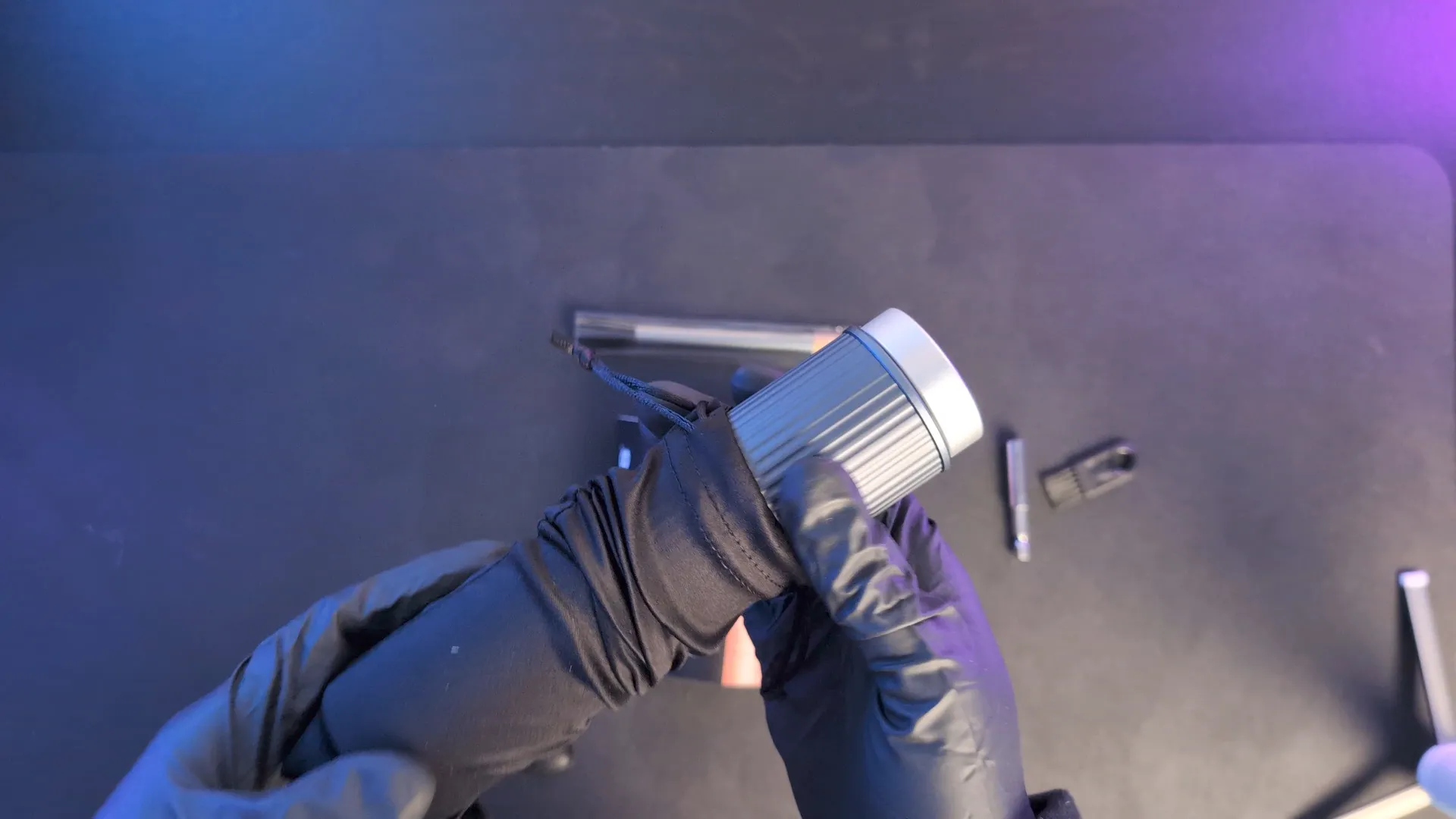
The grinder itself is a beautiful thing on first sight. It’s noticeably thin at 1.9” (a factor of it being designed to slide into an AeroPress) and tall at 7.4”. It looks sleek, and feels like a $200 product. The all-metal body makes it feel solid despite being lighter (1.2 lbs) than any of the other hand grinders we’ve reviewed.
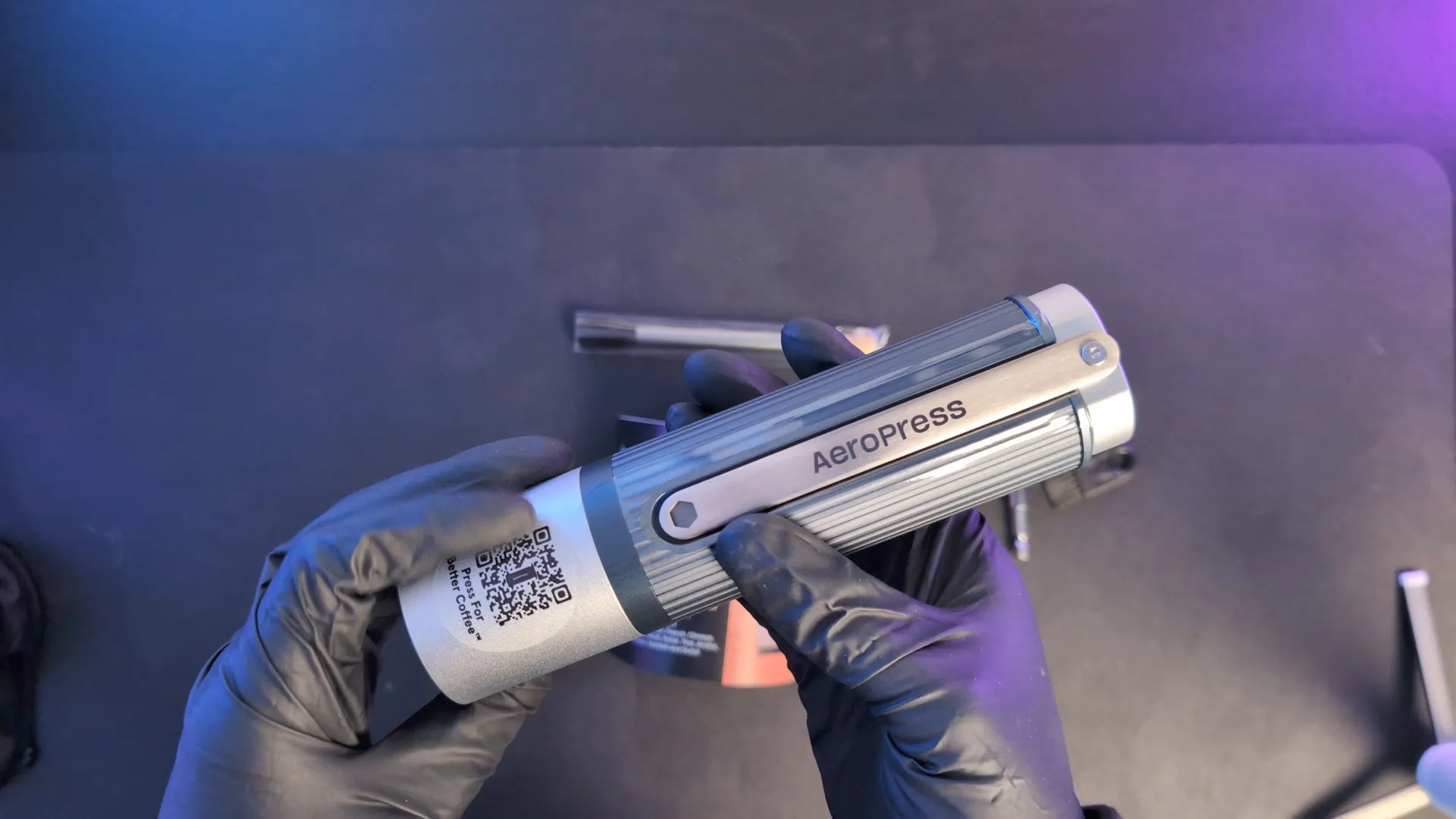
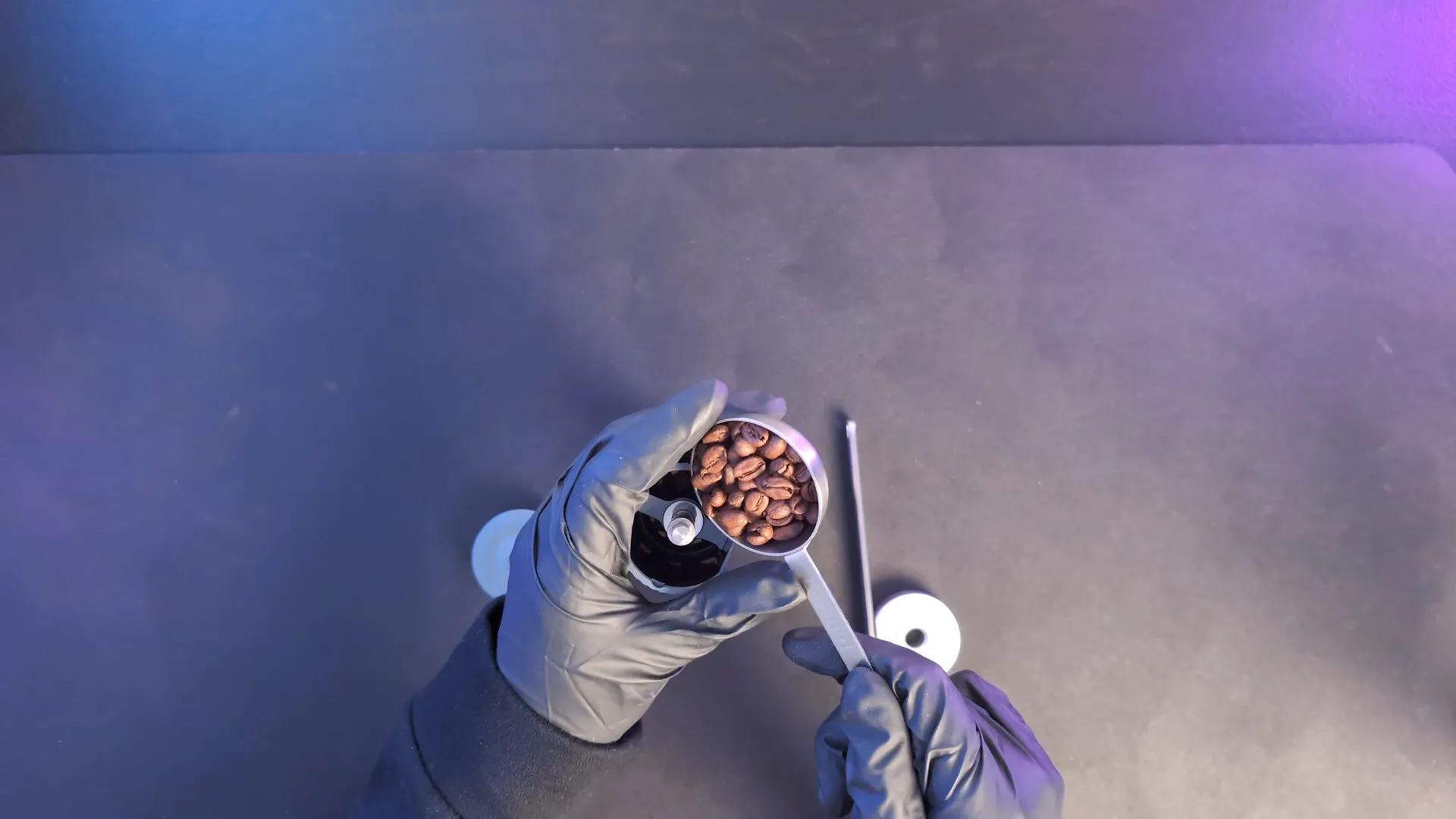
The grind adjustment comes pre-set to rotation 3, click 6, which the company considers to be the ideal setting for AeroPress coffee. If that’s what you’re making, then you can grind a dose of beans as soon as the grinder is out of the box.
Design
The most noticeable design choices AeroPress has made for the Manual Grinder all seem to be in service of its portability.
The handle seamlessly locks into the side of the grinder when it is not being used, held in place by a pair of magnets along the side of the grinder, and the handle’s knob, which slots into the top of the grinder shaft.
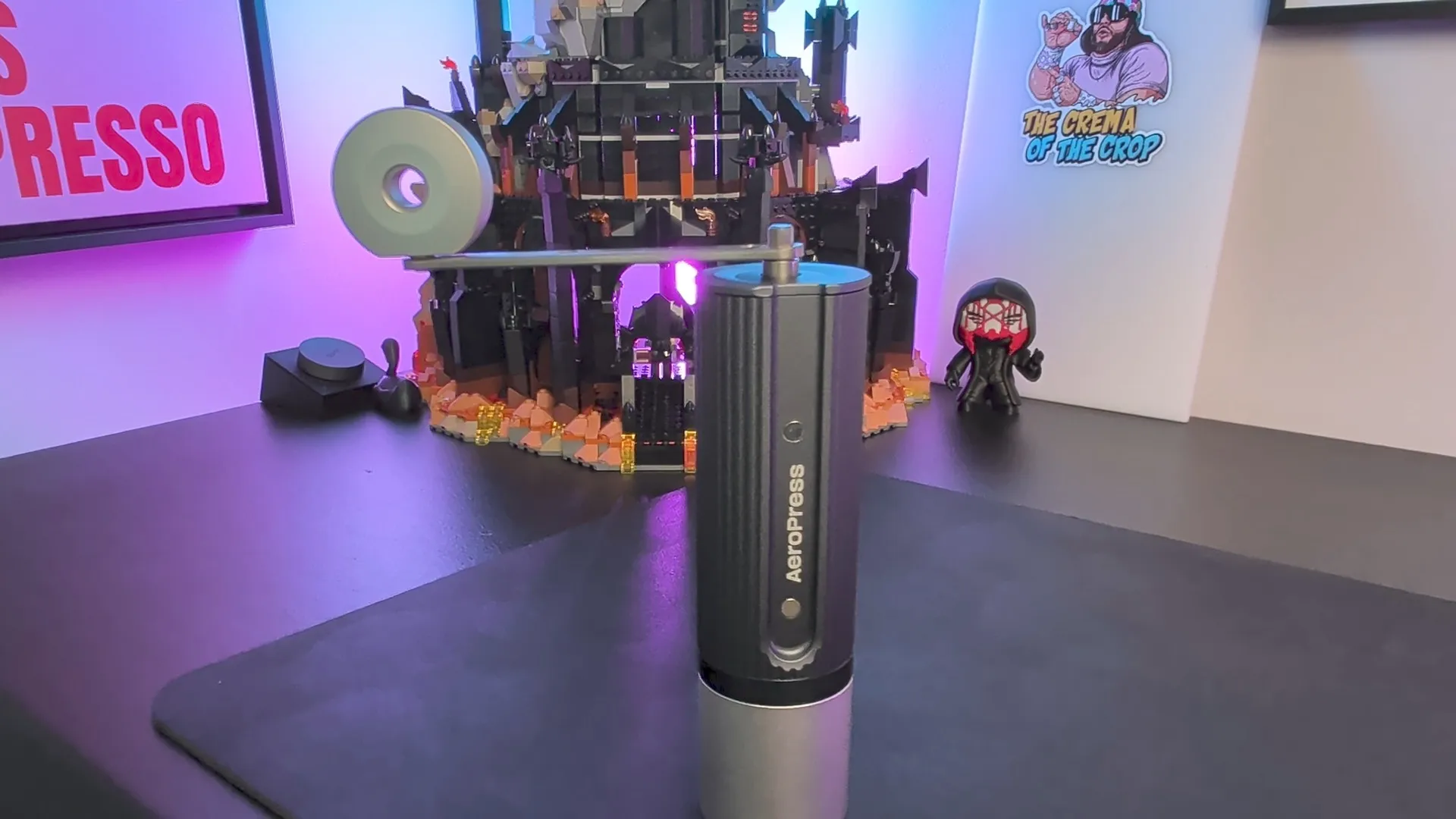
On the surface, no other grinder handles the problem of stowing the grinder handle quite as well as this one, but this comes with some pretty significant trade-offs. We found its flat, circular knob uncomfortable to grind with after 20 seconds.
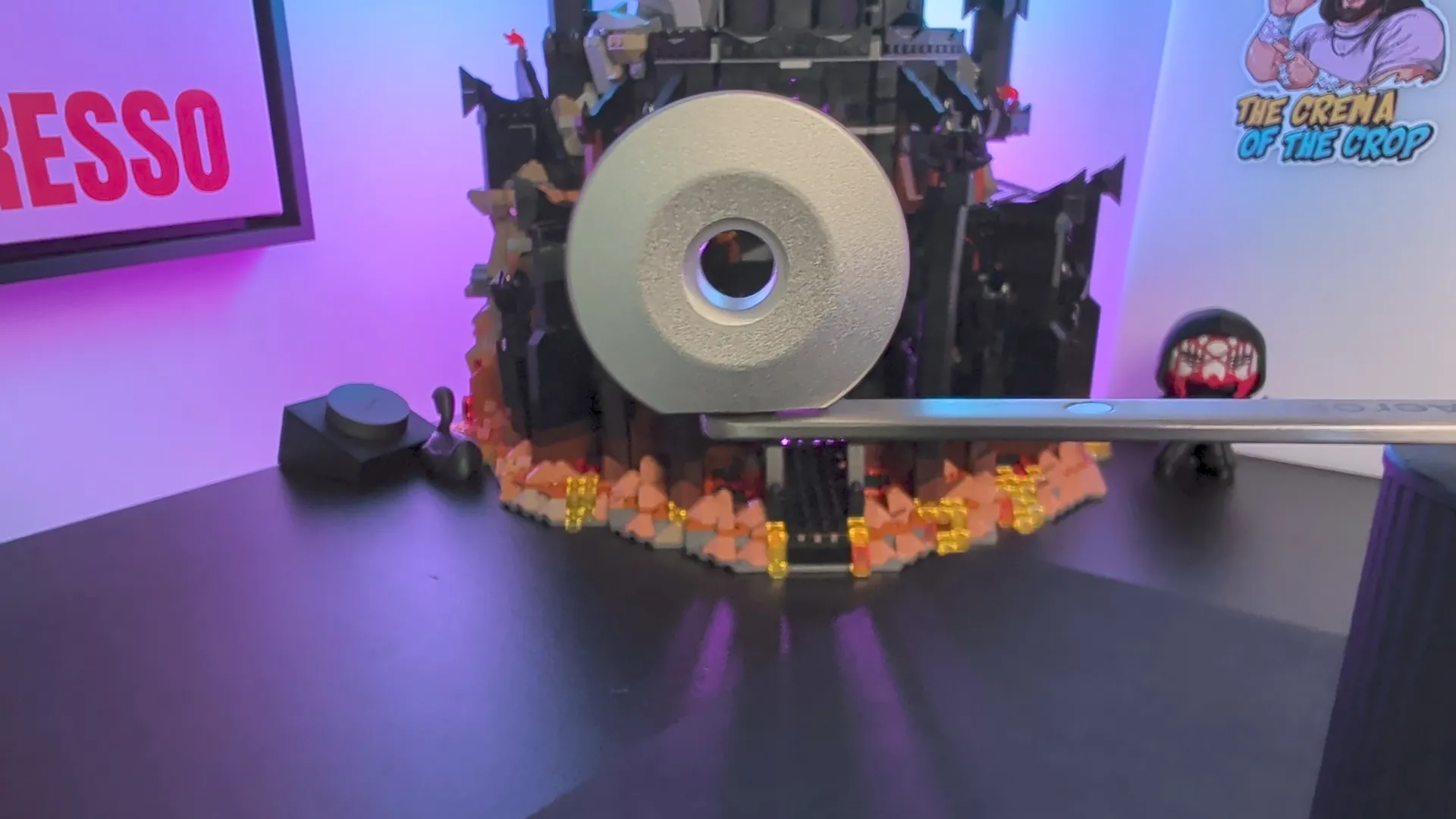
We’ve also had the knob come off multiple times during testing when grinding a little too vigorously. AeroPress claims that the extra-long handle makes for a low-resistance grind, so if you have the patience to grind at a slow smooth rate (easier said than done when grinding espresso) then maybe you won’t have this happen to you, but the handle felt downright flimsy to us during our tests.
On the subject of grind speed, the included drill bit adaptor raises an interesting discussion which we’ve touched on previously in our reviews of the KINGrinder K series: In theory, the ability to “hack” this grinder to be electric, but is this really worth the effort?
At this price, you’re in the ballpark of an electric grinder anyway, and while the AeroPress Manual Grinder has the added benefit of being portable, do you really want to keep a drill in your kitchen? Will your partner be thrilled to wake up to the sound of drilling?
Add to that that AeroPress calls out that any cosmetic or mechanical drilling as not covered by the warranty, and its hard to see anyone but a very specific set of users going for this option at all.
Gripes about the drill hack aside, the main thing the AeroPress Manual Grinder has going for it is its form factor. It manages to maintain the sleek look of the exterior by keeping the grind adjustment inside the grinder, under the burrs. It can be found by unscrewing the catch cup.
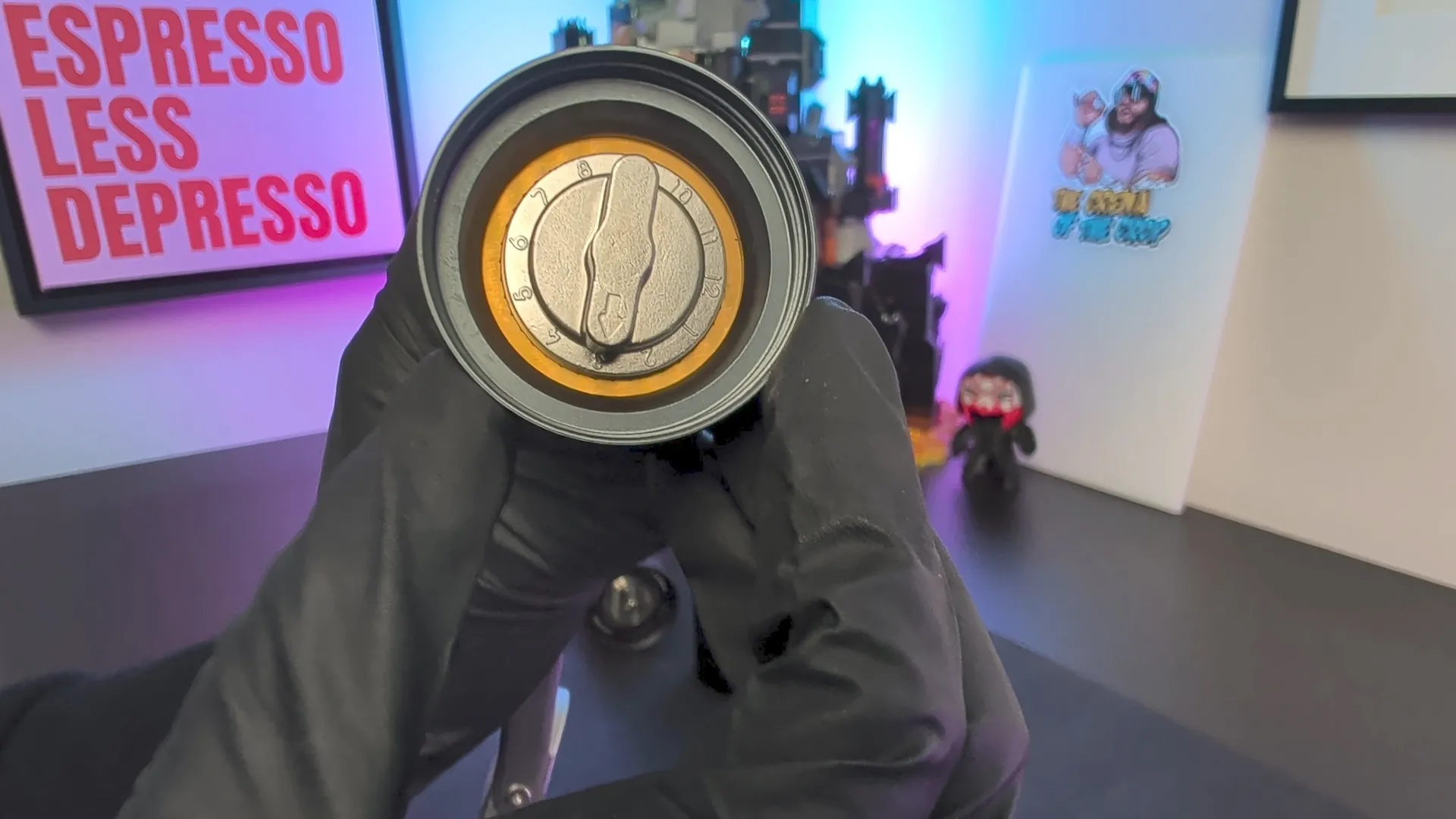
We’d view the threaded catch cup and the internal grind adjustment are both pros rather than trade-offs, as they keep the catch cup securely in place, and prevent accidental grind setting changes respectively.
The grinder can be disassembled by turning the grind adjustment past the 0 point while holding the handle in place. Taking it apart for cleaning is pretty straightforward, but reassembly can be fiddly, as the grinder has two similar-looking but not identical washers which need to be placed in a specific order. Youtube will be your friend for the first few cleans.
Burrs & Calibration
The AeroPress Manual Grinder comes equipped with Italian-made 38 mm titanium-coated burrs. At the price, it’s not a leap to assume that the relatively small size of the burrs (compared to the 42 mm burrs in Timemore’s C5 ESP Pro, for example) has to do with maintaining the grinder’s thin profile.
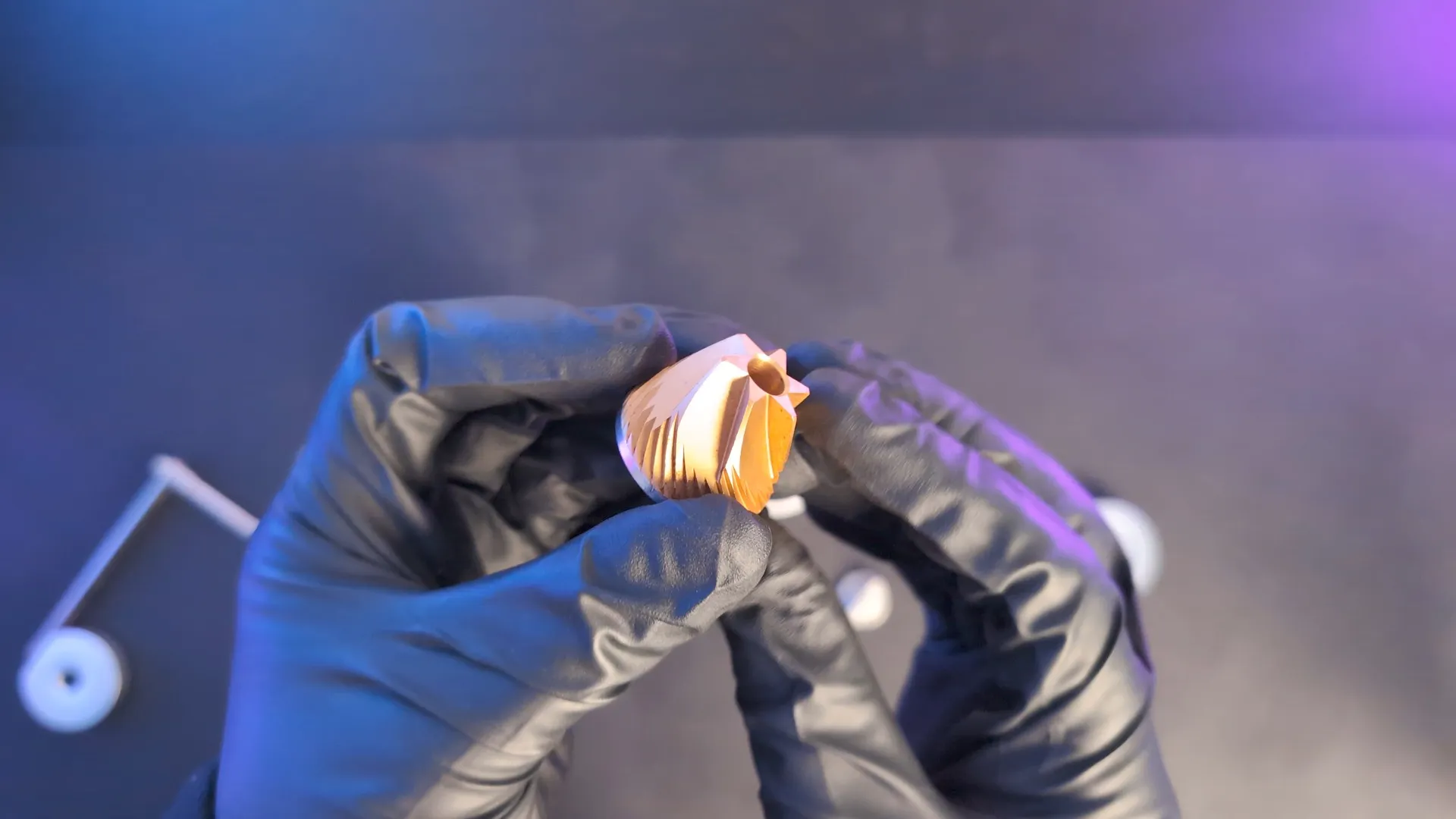
If you’re brewing with an AeroPress then this grinder has the unique claim to fame of requiring zero calibration, as it comes pre-set to AeroPress’s recommended brew setting. For everyone else, you’ll have to turn the adjustment counterclockwise until it stops to find the zero point, before turning it clockwise to dial in.
The grinder has 60 total settings across 5 rotations with 12 steps each. At that many rotations, switching from a fine setting to a coarser one can be a bit disorienting.
The instructions provide recommended grind settings, and, broadly, espresso sits in the first rotation, moka pot in the first and second, Aeropress in the third, drip coffee in the fourth, pour-over in the fourth and fifth, and french press within the fifth.
Performance
Particle Size Distribution Test
Given the uncomfortable experience of grinding with the Manual Grinder, it would have been great to see it redeem itself and earn its keep in the performance arena.
Our testing found that not to be the case. The Aeropress Manual Grinder is capable of espresso, but the particle analysis shows a bigger coefficient of variation compared to two grinders that are nearly half its price: the Timemore C3 ESP Pro and KINGrinder K6.
There was also a really big jump in variation between 2.5 rotations and 3 full rotations, and a lot of variation across the grind settings.
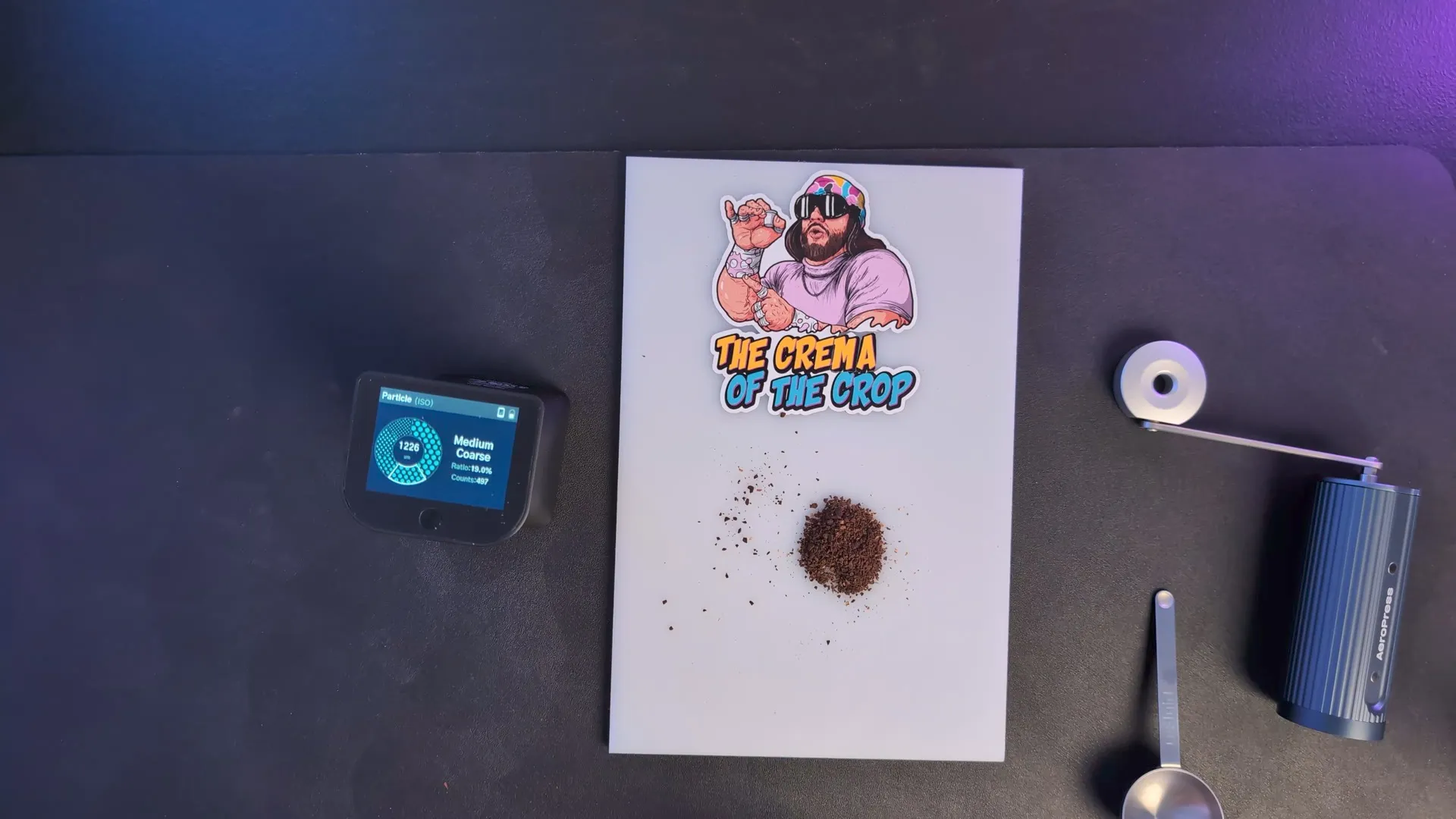
That’s not what we want to see when there’s a premium price tag.
Retention
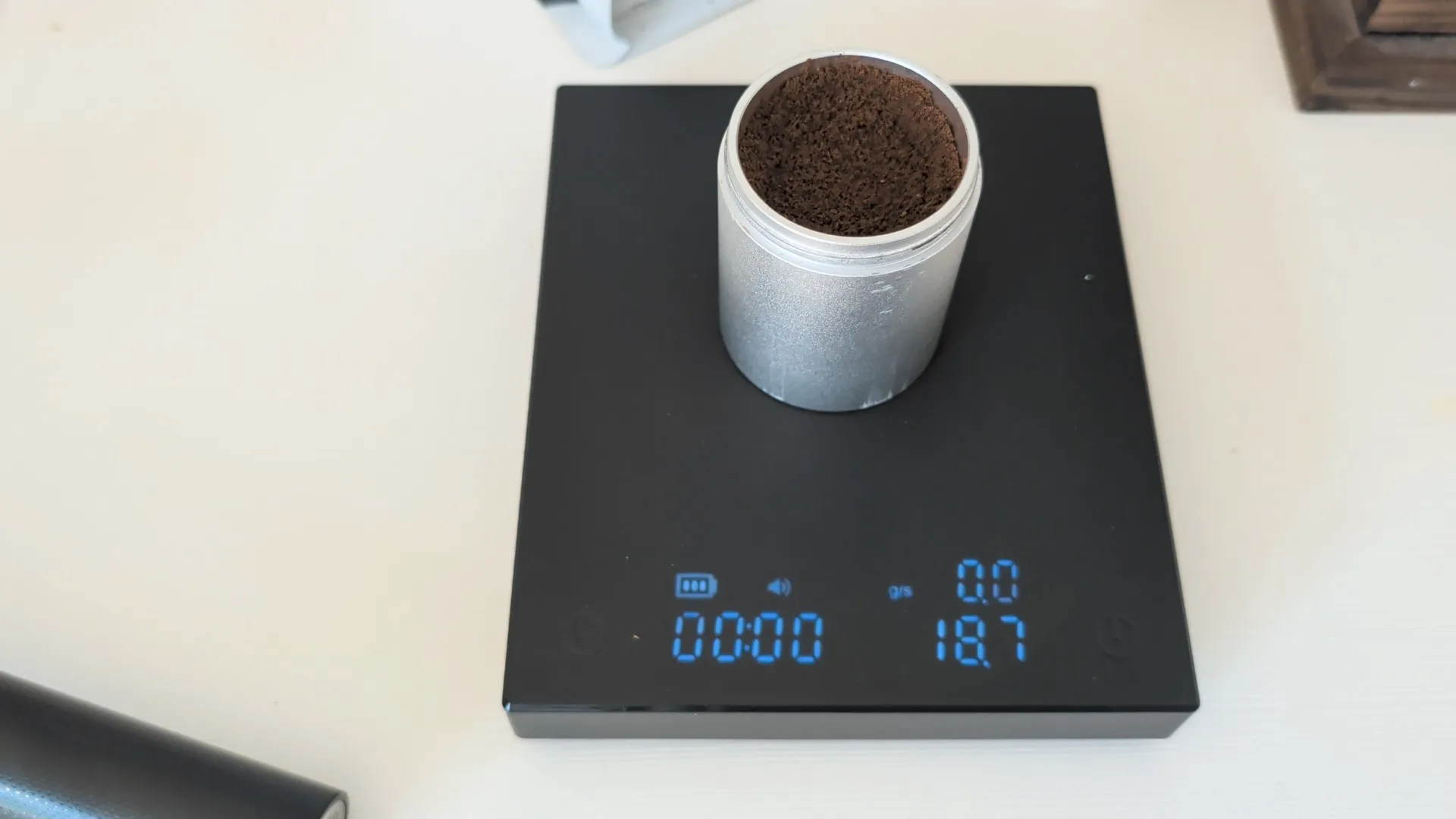
Retention was also comparatively worse to what we experienced with the Timemore C3 ESP Pro and KINGrinder K6. After 3 love taps, retention typically came in at around 0.3 grams. Detaching the handle and using it to tap base helped get the remaining bit out, but we found the base easy to scratch using this method, leaving a choice between either accepting a few scratches or accepting the ~0.3 gram loss.
Final Verdict
To come back to our initial question, does the AeroPress Manual Grinder perform well enough to justify its price tag? The short answer is no.
At $199, the main thing that the AeroPress Manual Grinder going for it is its portability. We've reviewed less-expensive grinders that are no-less portable which vastly outperform the AeroPress Manual Grinder. Unless you're a diehard AeroPress fan, you can save yourself a few headaches and roughly $100 by looking elsewhere. If you do have $199 burning a hole in your pocket, a cost-effective electric grinder like the Baratza Encore ESP, or a truly premium manual grinder like the 1ZPresso will give you a better bang for your buck.
Technical Specifications
| Brand | AeroPress |
|---|---|
| Model | Manual Grinder |
| Adjustment | Stepless |
| Settings | 60 |
| Weight | 1.2 lbs |
| Capacity | 25 g |
| Burr size | 38 mm |
Common Questions
- Who is the AeroPress Manual Grinder for?
- The AeroPress Manual Grinder can technically grind across all major brew methods, but at $199, it’s $100 more expensive than some other high-performing hand grinders, and the same price as entry-level electric grinders like the Baratza Encore ESP. This grinder is really mainly for the members of AeroPress crowd who don’t mind shelling out for greater portability.
- Can I use a drill to turn the AeroPress Manual Grinder “electric”?
- The AeroPress Manual Grinder includes a drill bit adaptor to make this possible, so the simple answer is yes; however, as mechanical damage caused by drilling isn’t covered by the warranty and there are serviceable electric grinders out there that are similarly priced, a better question might be: do you really want to?