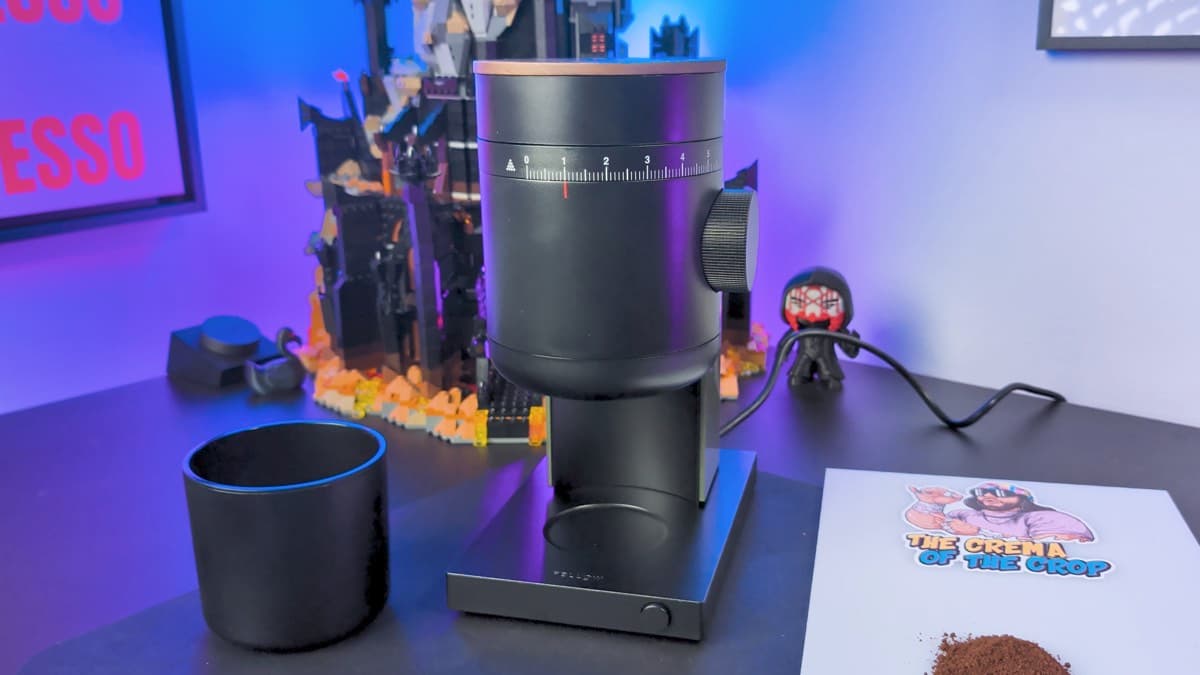
Fellow Opus 2 Review and Grind Chart
The Opus 2 is a home run for Fellow. At $199, its combination of value, premium performance, and quality design make it an easy recommendation.
Grind data is captured via DiFluid Omni NIR analysis. I plot the particle distribution across 16+ settings to identify the 'Optimal Zone' for each brew method. Actual results vary based on roast type and freshness, among others; however, it remains a starting point for dialing in.
This site is 100% ad-free and always will be. This particular review was conducted on a factory-new, calibrated unit, and was not sponsored. I purchased this unit for testing purposes. Purchases made through our links may earn a commission, supporting the testing and data acquisition.
Full Review and Benchmark Test
Since the release of its entry level all-rounder grinder, the Opus, in 2023, Fellow has been on a roll.
They released the acclaimed Aiden brewer in 2024, and their $1500 home espresso machine, the Espresso Series 1, in 2026.
Next to the rest of Fellow’s lineup, the original Opus has struggled to keep up. Despite being a serviceable low-cost option, it has garnered a reputation for high retention (although I found by using a bellows hack, it completely fixed retention problems) and some frustrating design elements, like fiddly adjustments at espresso-level fineness.
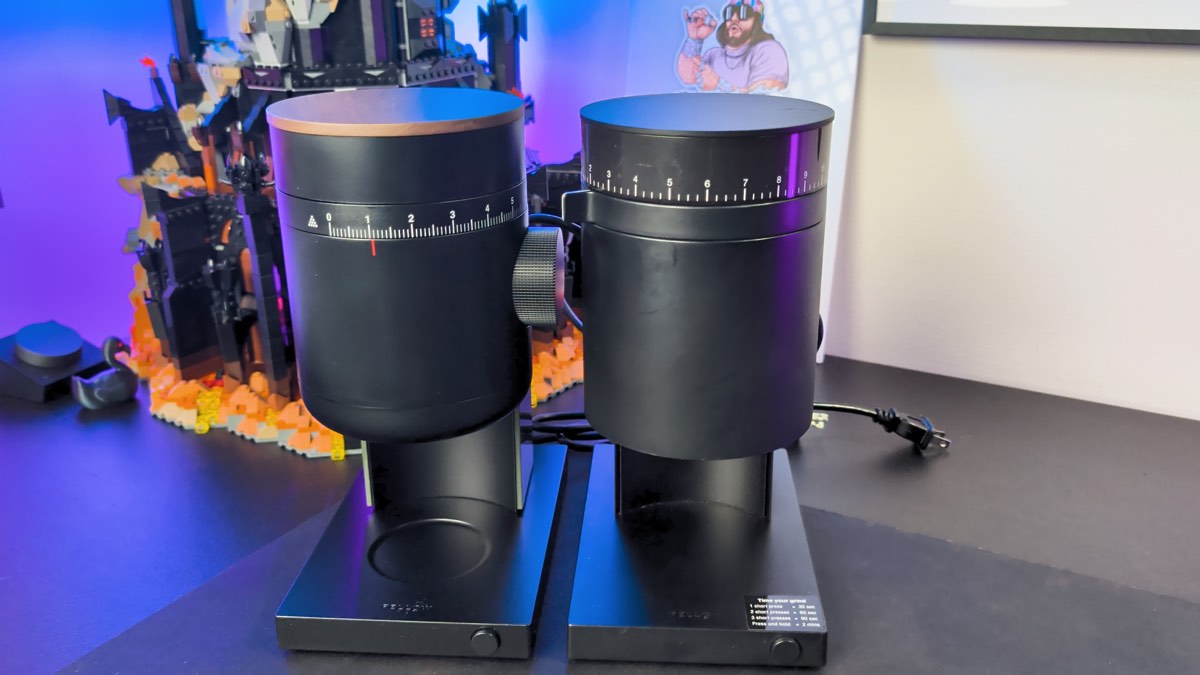
The Opus 2 (left) and the 1st generation Opus (right) side-by-side
In a post announcing the new Opus 2, Fellow’s current VP of R&D revealed that he came on board partway through the original Opus’s development, which helps explain some of the idiosyncratic elements of the Opus’s design, as well as how it fell behind the rest of Fellow’s vaunted product range.
The Opus 2 is hotly anticipated. As the only grinder in Fellow’s product line capable of grinding espresso, it was designed and timed to come out alongside the Espresso Series 1 while promising to iron out the original’s design flaws.
Perhaps the most exciting thing the Opus 2 has going for it is its price point. While a new Espresso Series 1 will set you back $1500, the entry-level all-black version of the Opus 2 debuted at $199, with the option to upgrade to a different colorway with a wooden lid and metal knob for an additional $50.
At just under $200 for a stepless grinder with 48 mm burrs that can handle all brew methods, the Opus 2 threatens to come for the lunch money of both entry-level electric grinders like the Baratza Encore ESP, and premium hand mills alike.
It’s certainly an exciting prospect, and it could reset the lower end of the grinder market. In this review, we’ll take a deep look and see if the Opus 2 improves on its promising predecessor.
Features
- Available in all-black or all-white with all-plastic exterior components ($199) or 6 other colorways with a walnut lid and metal adjustment knob ($249.99)
- 48mm conical burrs
- Two included catch cups: one for espresso and one for brewed coffee
- Stepless grind adjustment
Unboxing
The Opus 2 ships in packaging that’s as premium-looking as you’d expect from a Fellow product, and even the unboxing process feels well-curated.
A flap on the front of the box marked “hello” folds open to reveal a cutout in the cardboard padding which holds a small, black box with the Fellow logo containing the product info and instructions, and a branded cleaning brush.
The rest of the components are individually wrapped (the espresso dosing cup, the standard catch cup, the main unit, and its lid), and once the packaging has been removed, the magnetic base of either catch cup snaps satisfyingly into place on the base of the grinder.
Even the cleaning brush is magnetic, with its own home on the back of the body behind the load bin.
Already, the experience of using the Opus 2 feels well thought-out. Unboxing it feels like opening a product well above the $200 mark.
Design
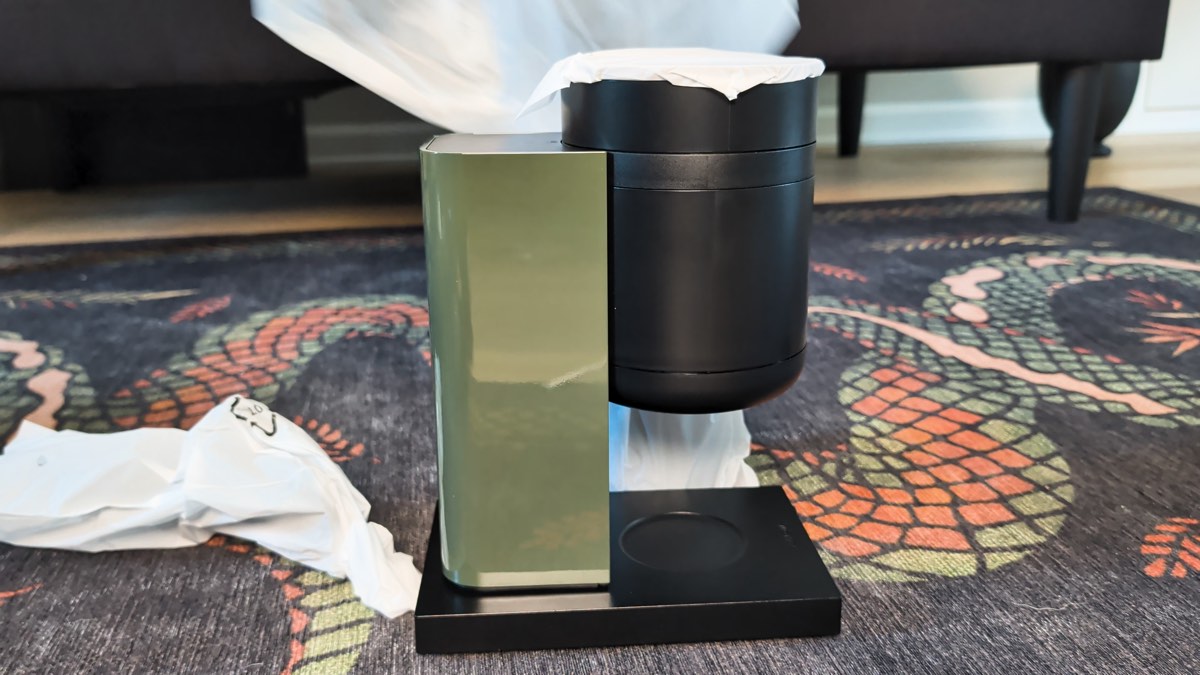
Speaking of that $200 price point, when first laying eyes on the Opus 2 it’s hard not to wonder how a grinder with this feature set that looks this good can be so inexpensive. The savings had to come from somewhere, and the answer is in the Opus’s plastic components that make up the bulk of the Opus’s exterior.
I opted for the forest green colorway, which had to be ordered through Crate & Barrel. The deep, glossy green paired with the walnut lid gives a lovely moodiness that will likely fit into a lot of design-heavy home espresso workbenches.
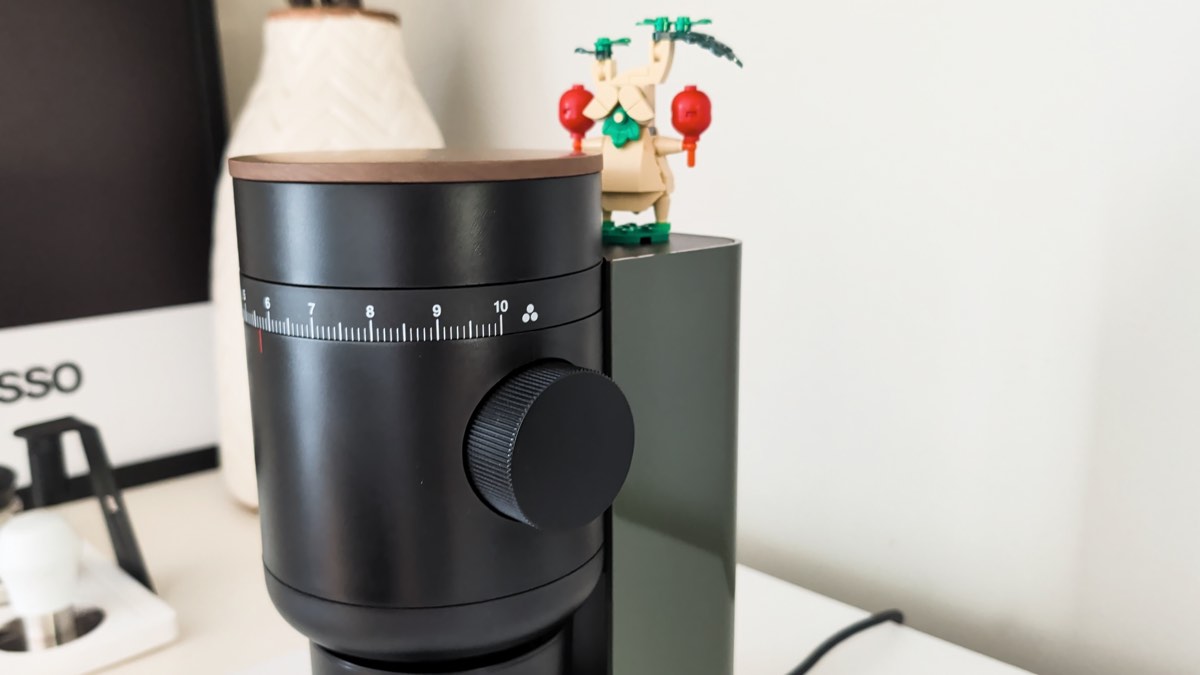
Fellow is very good at making beautiful products out of plastic, so major credit to them. My colorway option includes an upgraded metal adjustment knob, but it lacks a tactile feel as you rotate the dial - something a truly higher end product may include.
Outside of the understandable compromise in materials, the Opus 2 is an exemplar of thoughtful usability.
Grind adjustments using the Opus 2’s knob make intuitive sense, which is worth calling out, as making precision adjustments with the first Opus involved a convoluted process where you had to remove the hopper lid, making dialing in a headache.
Grinding only takes hitting the button on the Opus 2’s base once. Its auto-stop will stop grinding as soon as all the beans are ground. Users wanting a hot start can hold the button down, which will start a 45-second long grind.
The included espresso dosing cup makes it easy to transfer all of your grounds into a 54 or 58 mm portafilter. Another improvement on the original Opus, which shipped with a dosing cup that had fins that coffee could easily hide behind.
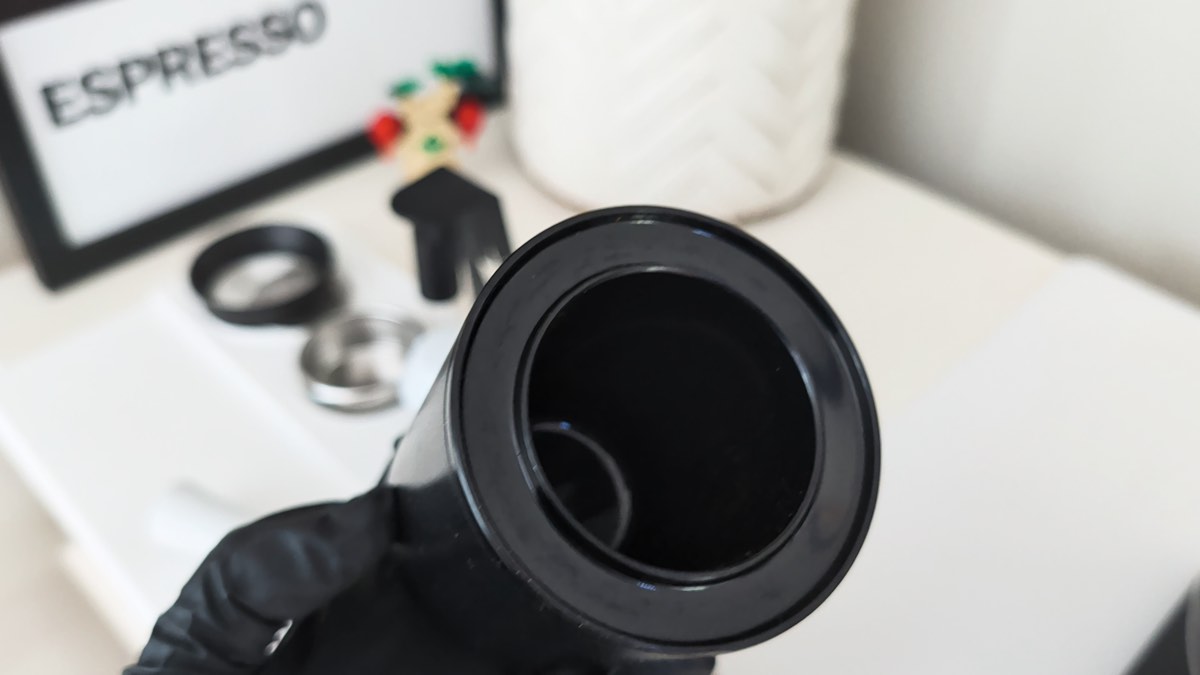
If the goal was to iron out all of the elements that held the Opus back from being the perfect entry-level grinder, the Opus 2 has, at least on a design level, accomplished that.
Burrs
Though they’re unlikely to deliver the level of clarity that Fellow’s filter-focused sibling, the Ode 2, can with its 64 mm flat burrs, the Opus 2’s own 48 mm conical burrs represent an upgrade over the original Opus’s 40 mm burrs.
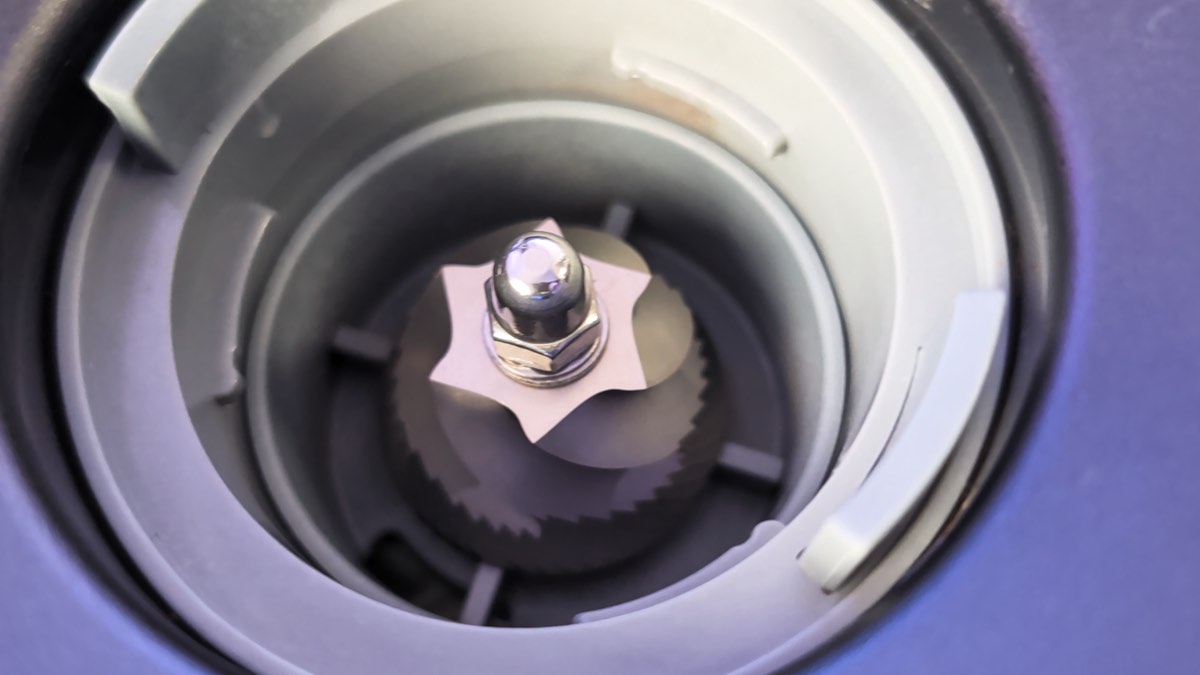
Accessing the burrs is really straightforward. All you have to do is turn the load bin counter clockwise and lift it off to reveal the burr set. With another counter clockwise twist of the handle on the outer burr, the burrs can be removed for cleaning. All of this can be done with one hand, which is (once again) really impressive from a design standpoint.
One of the really unique features of a grinder at this price point is the fact that adjustments are stepless, meaning there’s (in theory) no limit to the granularity with which you can dial in.
Of the 10 major grind settings that the Opus 2 outlines, the espresso range is all contained within settings 1 and 2, which means that espresso drinkers can dial in anywhere within the 20% of the adjustment ring (roughly 2”) that they have to work with.
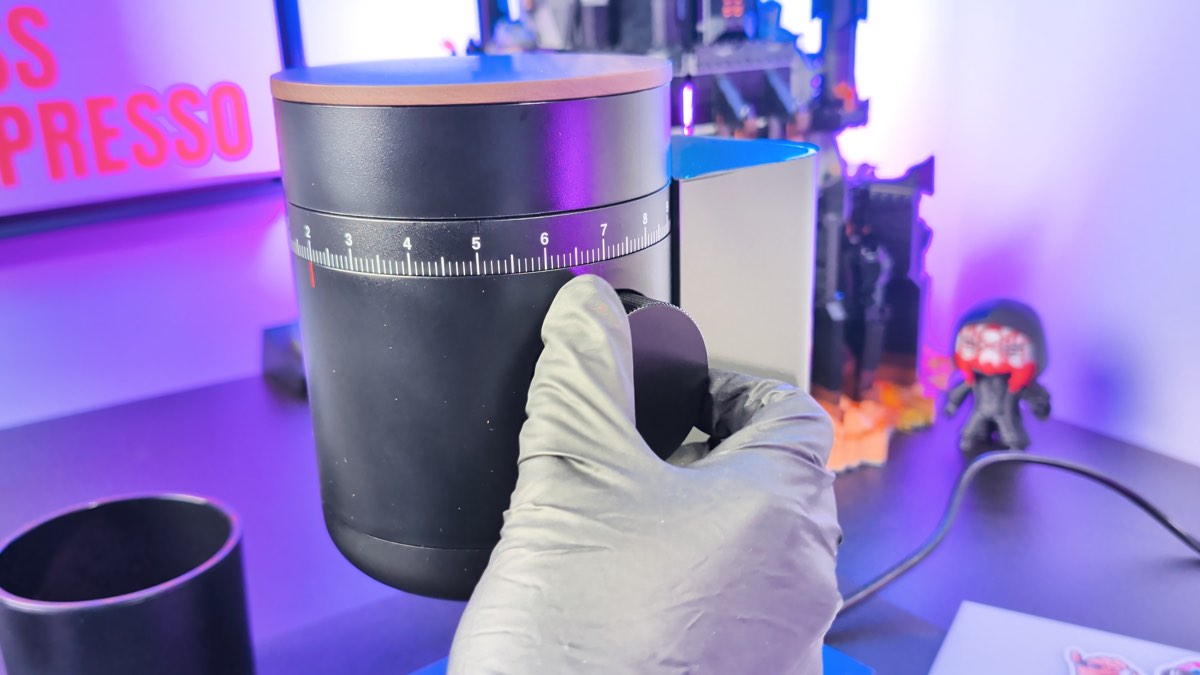
This all sits on top of a grind path that, according to Fellow, has been redesigned to bring retention down to 0.1 g for light or medium roasts, and .3-.5 g for dark roasts. Let’s see if the Opus 2 can deliver in testing like it does on paper.
Performance
I mentioned the automatic shutoff earlier, which was missing in the last model. I didn’t know how badly that was missing. It consistently runs for ~3 seconds after the beans are finished, allowing a bit of time to clear out any retained grinds.
Noise-wise, the Opus comes in around 85 decibels. Quieter than the Baratza Encore ESP, but still within the range that you'd expect at $200.
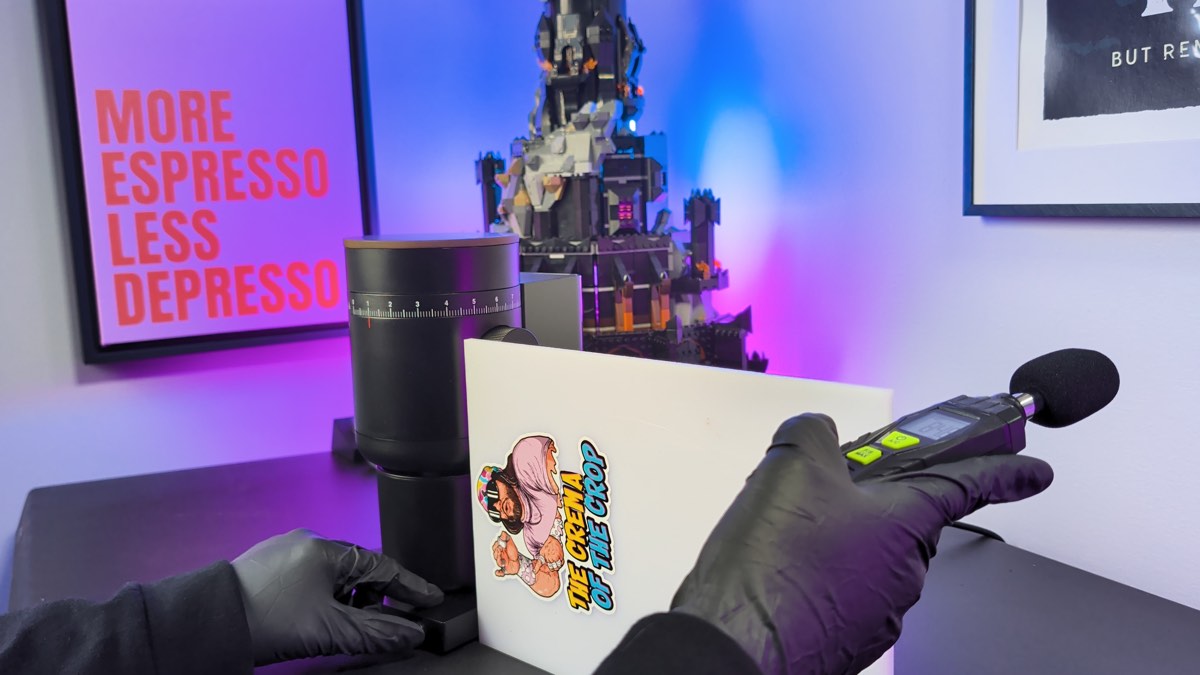
Then there's the speed. This thing grinds really fast. Or maybe it’s because I just wrapped up reviews of 3 manual grinders…
Particle size distribution
Right off the bat, a noticeable change is the extended coarse grind reach. During my tests, the max setting of 10 reached 1450 microns, whereas the previous model’s max setting of 11 only reached 1200. Not only that, the Opus 2 did so with a very respectable 6.3% coefficient of variation. Slap me - are we using flat or conical burrs?!
To make things even better, setting 2, right at the upper end of espresso, produced a remarkably tight between-run standard deviation of 10.8 microns. As a reminder, this data is based off of 5 particle analysis tests per setting. This can be used for spotting consistencies; however, I do plan on increasing the number of tests soon for a clearer picture across the grinding spectrum.
Here’s a closer look at the data set and findings.
UPDATE: I ran additional tests, resulting in 10 individual particle analysis runs per setting (total of 110).
Retention
Using my standard medium roast beans, I first tested a dry 18 gram dose which resulted in a 0.3-0.4 gram loss. That’s honestly a big improvement from the OG, which was about a full gram - unless you used a manual bellows. But what I really like here is it’s directly in line with what Fellow expects.
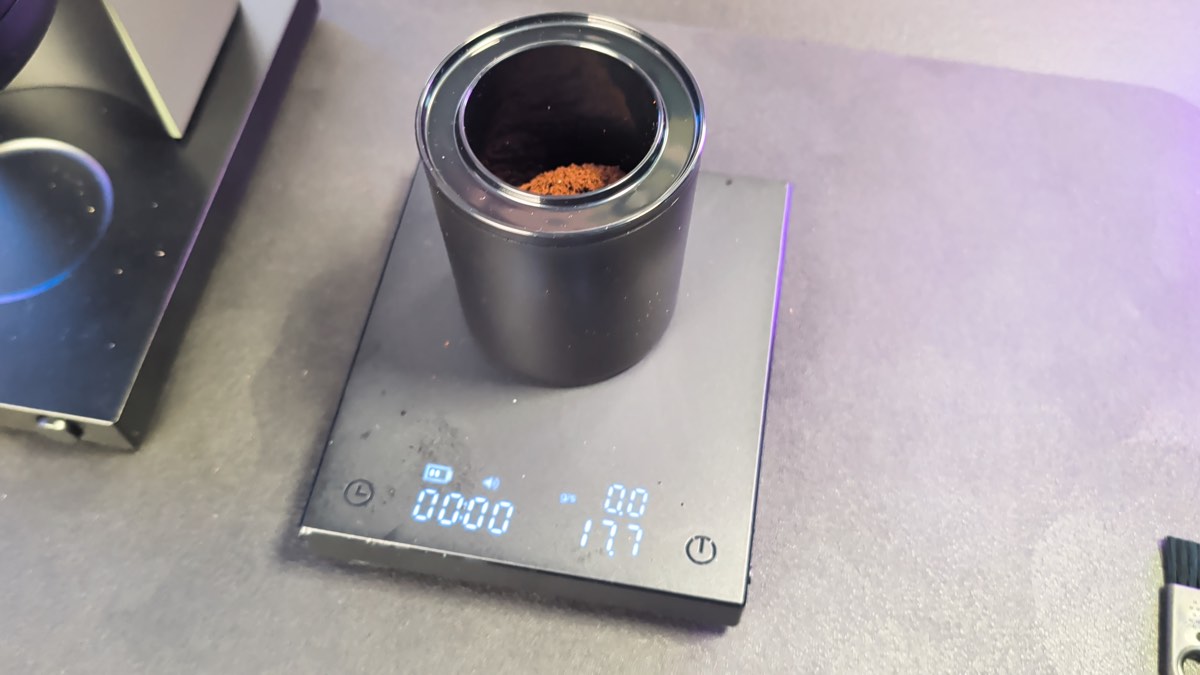
So next I used the Ross Droplet Technique, but I didn’t clean out the retained grinds enough so it worked a bit too well, resulting in a 0.2 gram gain. I thoroughly cleaned everything out properly, used two spurts of mist, and the result? Net zero retention. Just wonderful.
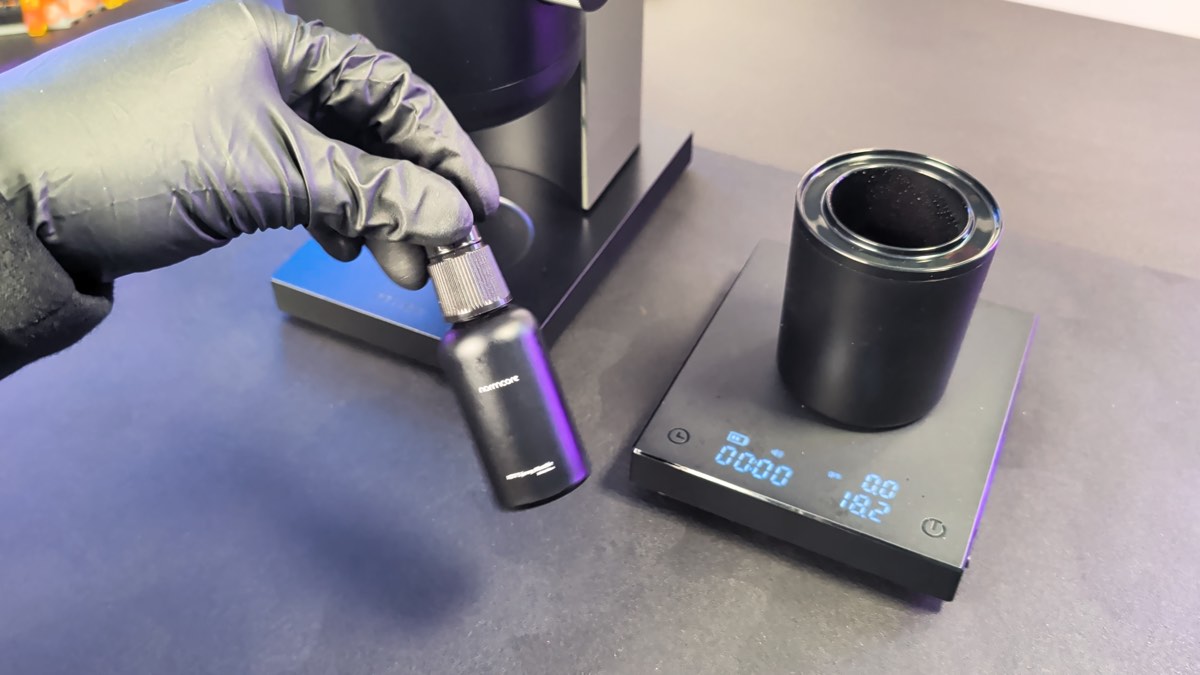
Clearly they made improvements here. All of these tests were without using the lid as a bellows, which I absolutely had to do with the original Opus.
Final Verdict
The Opus 2 is a home run for Fellow. It completely rights the wrongs of its predecessor, and provides the seamless workflow, upgraded burrs, and stepless precision needed to actually enjoy making espresso on a budget without sacrificing your filter coffee routine.
If you want a dead-simple, beautiful electric all-rounder that won't break the bank, Fellow just completely reset the standard for 200 bucks.
Technical Specifications
| Brand | Fellow |
|---|---|
| Model | Opus 2 |
| Adjustment | Stepless |
| Footprint | 8.1” L × 5.1” W × 10.5” H |
| Weight | 5.1 lbs |
| Capacity | 100 g |
| Burr size | 48 mm |
Common Questions
- Why would I buy the Ode 2 when the Opus 2 is $200?
- Fellow’s Ode Gen 2 is about twice the price of the Opus 2. Based on price alone, buying the Opus 2 seems like a no-brainer; however, the Ode 2 has a sterling reputation with users who exclusively brew with pour-over, drip, AeroPress or French press. With 64 mm flat burrs to the Opus 2’s 48 mm conical burrs, the Ode 2 will deliver more clarity for brew methods requiring coarser grind settings, while the Opus 2 is Fellow’s answer for anyone brewing espresso at home.
- Should I buy an Opus 2 or spend the $200 on a hand grinder?
- The answer really depends on the hand grinder. If you’re comparing the Opus 2 to something like the AeroPress Manual Grinder, which is the same price, then our answer would be the Opus 2 10 times out of 10. If you’re price conscious, you can get a quality espresso hand grinder, like Timemore’s C3 ESP Pro and save some cash on the Opus 2’s purchase price. If you aren’t weighing in portability and can’t be bothered to grind by hand, then Opus 2 is as good as it gets for $200.
- What’s different between the Opus and Opus 2?
- The Opus 2 has had the benefit of being able to use 3 years of feedback on the original Opus. It has significantly reduced retention (a consistent complaint from owners of the original), and has introduced larger burrs (48 mm up from 40 mm) and stepless adjustment, doing away with the finicky precision adjustment of the first Opus.
- How does the Opus 2 compare to the Baratza Encore ESP?
- In our review of the Encore ESP, we found that the ESP’s achilles heel was retention. The Opus 2’s lack of retention and stepless adjustment give it an edge, and with both grinders retailing at the same price, the Opus 2 seems poised to become the new favourite entry-level option.