Timemore C5 ESP Pro Review and Grind Chart
A noteworthy upgrade from the C3. I'll take this new C5 every time over the little brother.
Grind data is captured via DiFluid Omni NIR analysis. I plot the particle distribution across 16+ settings to identify the 'Optimal Zone' for each brew method. Actual results vary based on roast type and freshness, among others; however, it remains a starting point for dialing in.
This site is 100% ad-free and always will be. This particular review was conducted on a factory-new, calibrated unit, and was not sponsored. I purchased this unit for testing purposes. Purchases made through our links may earn a commission, supporting the testing and data acquisition.
C5 ESP Pro Grind Size Chart
A Note on These Settings: The interactive chart below uses a combination of manufacturer and crowdsourced data from CoffeeOS to give you a rough "ballpark" starting point for dialing in. For the true technical breakdown, scroll down to my particle analysis, where I use a DiFluid Omni to measure actual micron distribution, fines percentage, and grind consistency of this unit.
Full Review and Benchmark Test
The Timemore C5 ESP Pro is the newest espresso-focused entry into Timemore’s affordable C-Series. We loved its older sibling, the C3 ESP Pro, which we found combined the precision and low-retention that you’d normally expect from a grinder way above its $100 price point.
The C5 comes equipped with a redesigned set of burrs, a handful of changes to the C3’s design, and a price tag of $115. But will it steal our hearts like the C3 did? Let’s find out.
Features
- All-aluminum body (available only in black)
- Folding handle
- 15 micron per click grind adjustment with 50 clicks per rotation across 3 rotations
- 42 mm S2C-042-III stainless steel burrs
- Included cleaning brush
Unboxing
The C5 ESP Pro’s packaging is consistent with that of the rest of the C-range. The front of the box contains a minimalistic actual-size gold silhouette of the grinder against a black background. It’s an appealing box, and it does the job of making you want to get to what’s inside it as soon as possible.
Inside is pretty straightforward. There’s the separately-wrapped grinder body, its folding handle, an included cleaning brush, and a very-clear set of instructions.
Gone is the travel pouch that was included with the C3 ESP Pro, but if that’s a corner that had to be cut to keep the cost in the low $100s, then it’s not a huge loss.
The build-quality of what’s inside is hard to ignore, especially when compared to something like the KINGrinder K6 or K7 which has a plastic lid on an otherwise all-metal body. There’s no plastic here, and from the knob on the handle to the catch cup the grinder feels substantial.
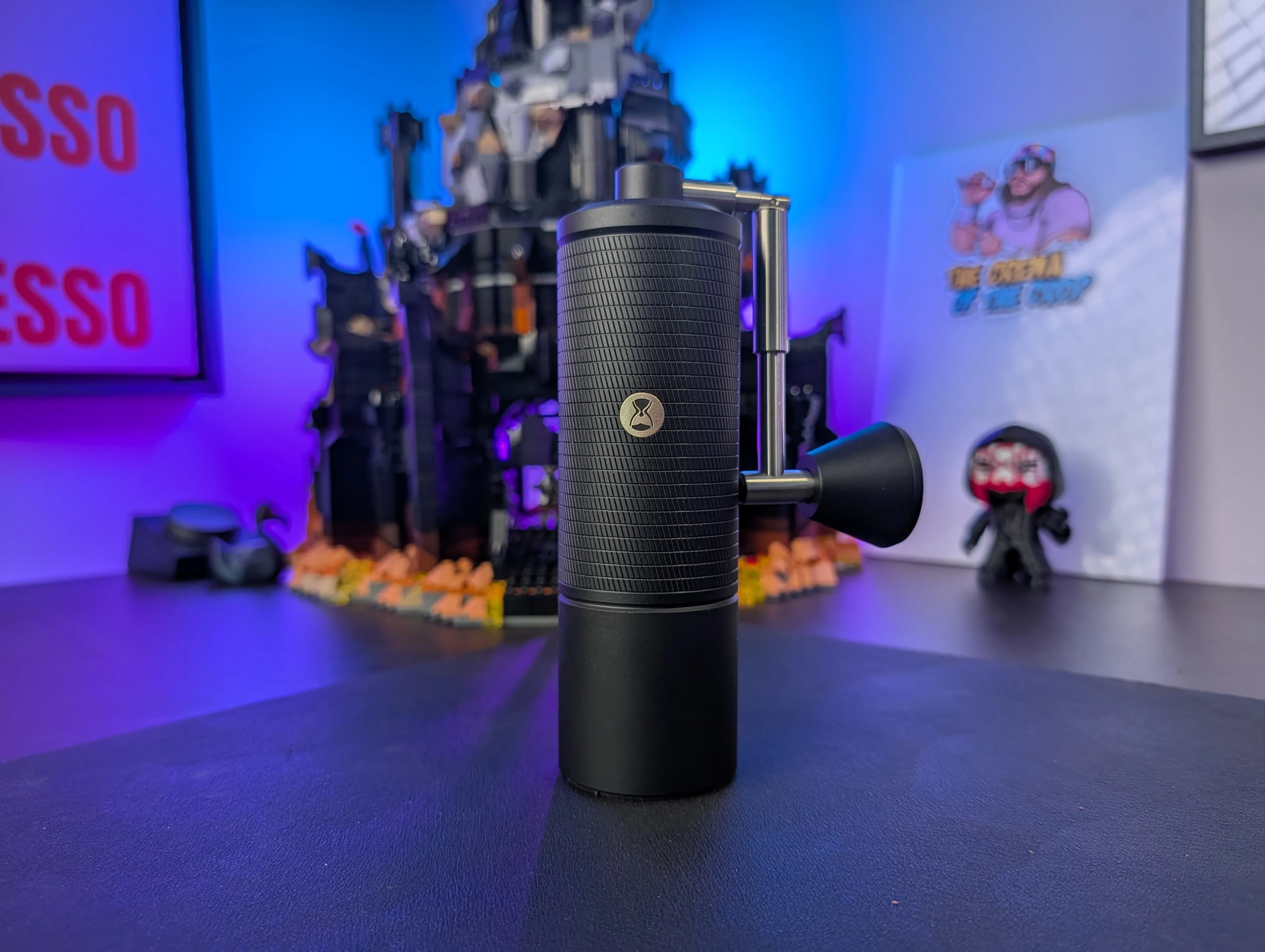
The C5 ESP Pro is slightly taller (6.77” vs. 5.79”) and heavier (1.4 lbs vs. 1.17 lbs) than the C3 ESP Pro, while retaining a width of ~2”. The size difference lends to the first impression that we’re dealing with an upgrade when comparing the two side-by-side.
Design
The C5 ESP Pro boasts a series of design changes from the C3, and almost every change brings a noticeable quality-of-life improvement with it.
This starts with what Timemore calls its “XL funnel.” In practice, this combines the C5’s taller body with a flared opening at the top of the grinder to make it easier to pour in a dose. Every hand-grinder user will be used to making a makeshift funnel with one of their hands when pouring a dose, and while the hand funnel is likely here to stay, it does add some guidance and help prevent spills.
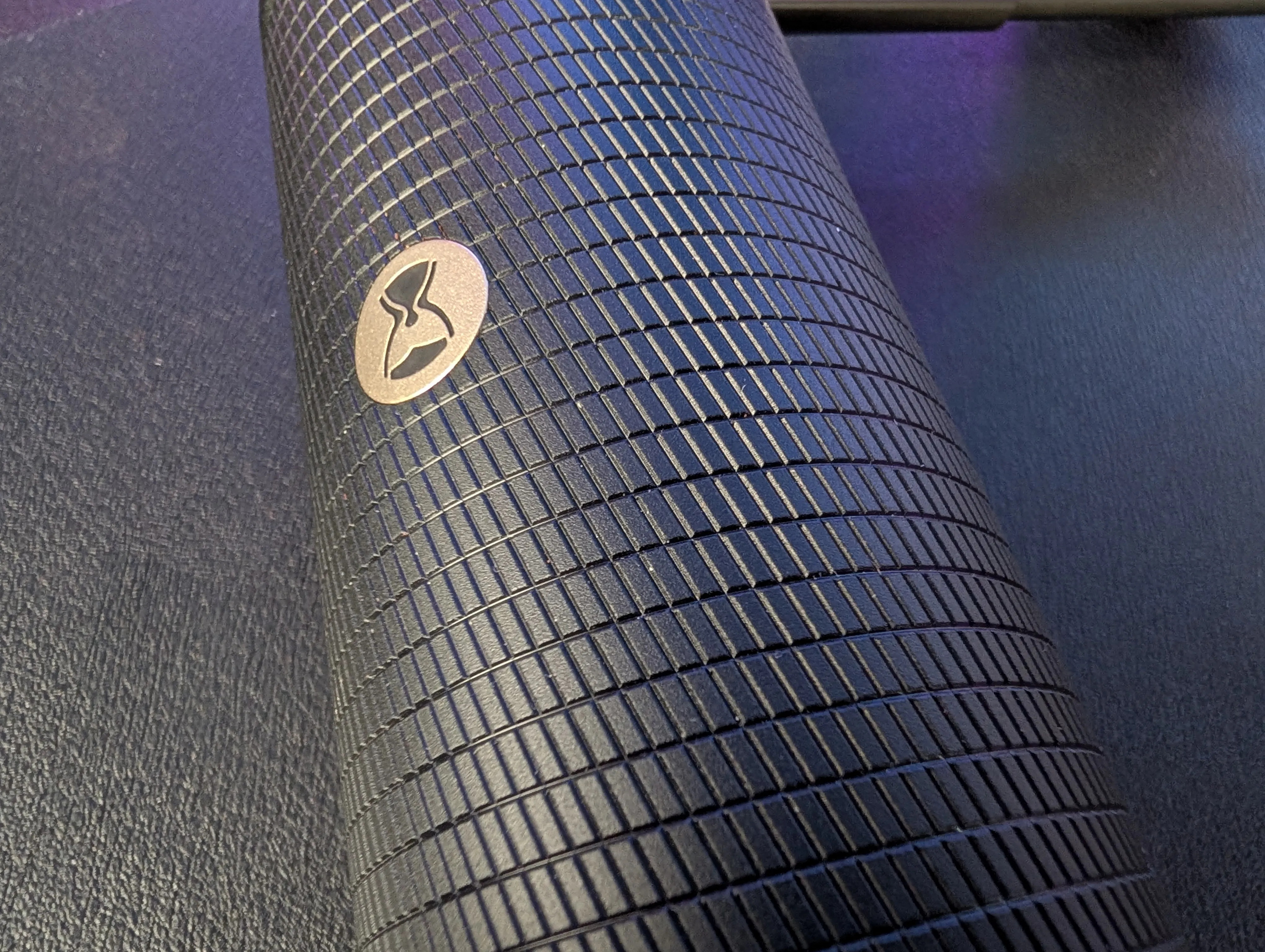
The exterior of the C5 ESP Pro has also received a bit of attention. The textured metal grid of the C3 ESP Pro has been tweaked slightly so that the metal grid runs along slightly diagonal lines, increasing resistance for improved grip when grinding.
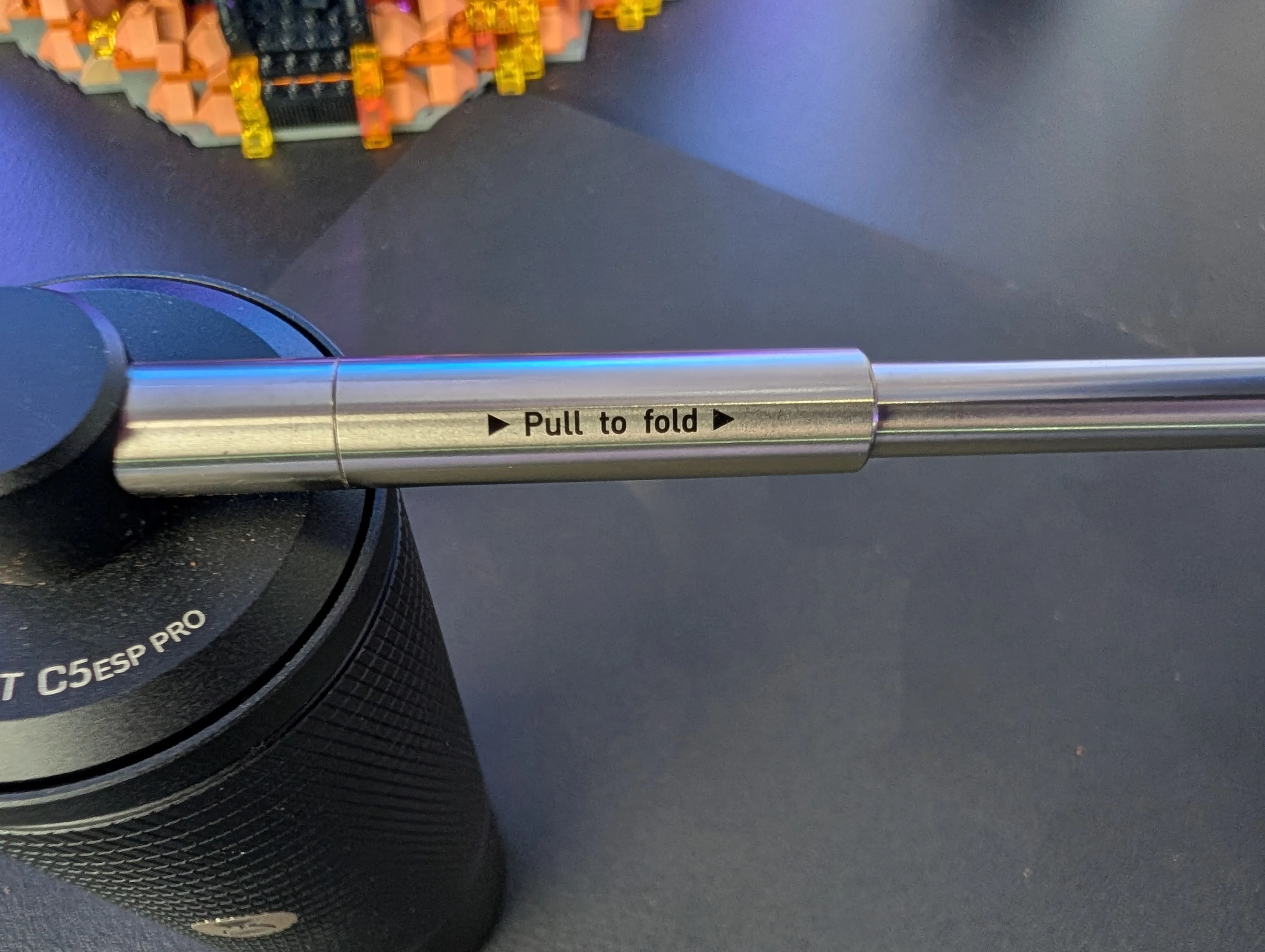
The C-series’ folding handle (The inclusion of a folding handle is what makes any of Timemore’s offerings “Pro”) remains an elegant way to stow away the grinder for travel. A rubber stopper on the handle base protecting the body from metal-on-metal contact is a particularly nice touch.
The grind adjustment has also received some attention. The location of the dial has remained the same. It’s internal during grinding, housed under the main body. This goes a long way to making sure that, once you’re dialed in, your grind setting isn’t changed by accident during the very physical act of manually grinding espresso. The appearance is also very familiar, but what has changed is a new adjustment mechanism that makes clicks feel sharper when making changes.
This is what you want to see between versions of any product: All of the elements that made the previous generation strong have remained, and any changes have only made things better.
While overall design in the C5 ESP Pro marks an improvement over the previous iteration, it’s the burrs that are the real difference-maker here.
Burrs & Calibration
The C5 ESP Pro uses Timemore’s 42 mm S2C-042-III stainless steel burrs. S2C means “spike to cut” which refers to the extra teeth located at the top of the burr which are meant to cut through the beans before they reach the burrs below.
Without adding to the ESP Pro’s diameter, the C5 has 4 extra millimeters of burr on the C3, as well as 150 total settings at 15 microns per click (an improvement of 8 microns per click, and an addition of 60 settings).
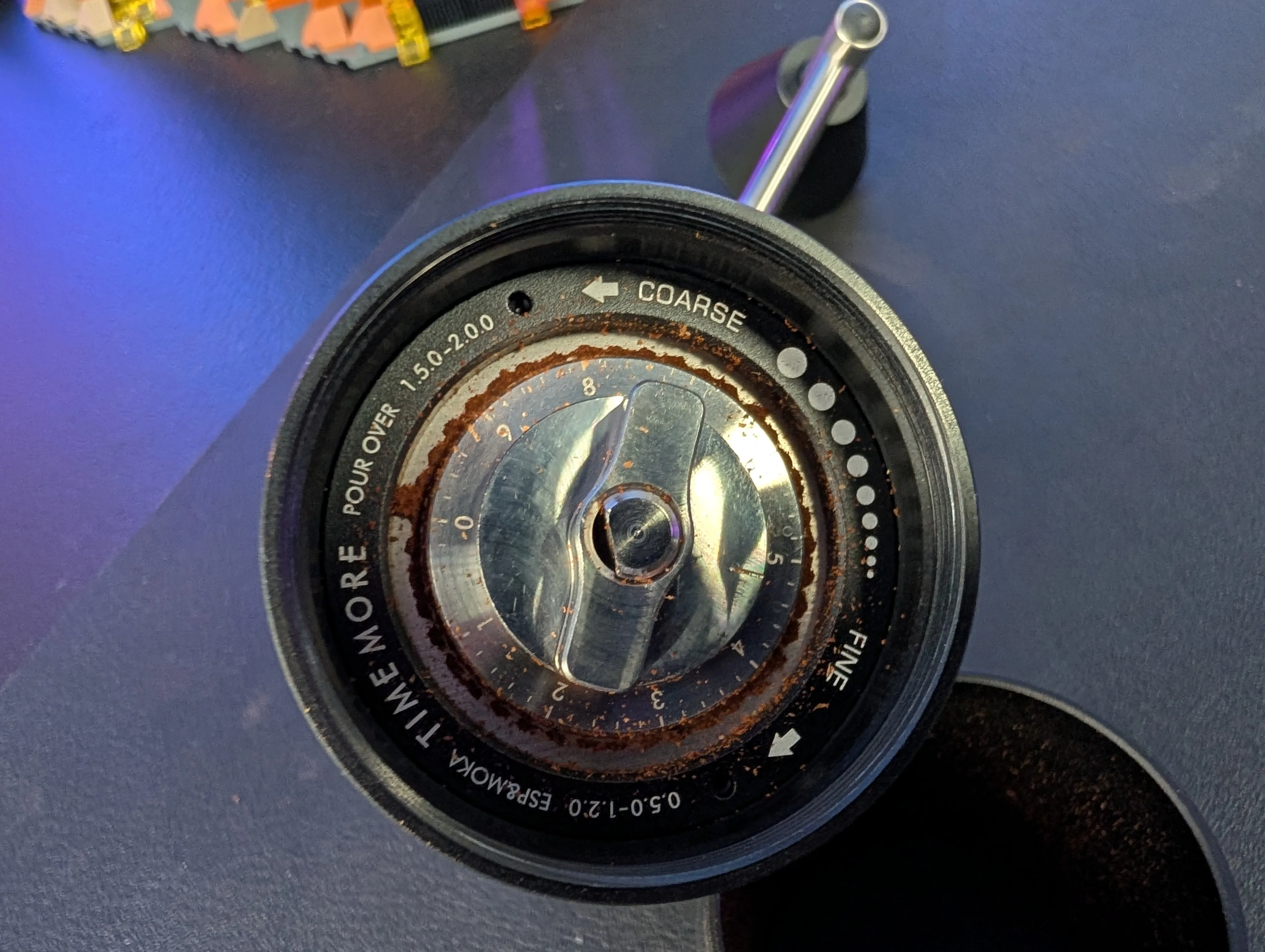
On paper, the C5 ESP Pro is extremely precise. Timemore also claims that the C5’s additional height and its resulting longer grinding path makes for a more consistent grind. Let’s see how it performs.
Performance
Particle size distribution
The C5 does an impressive job at espresso ranges, and an as-expected job in pour-over ranges given the burr size. Interestingly, there was a stall between 1.4.0 and 1.6.0 where the microns leveled out, ending up with a remarkably similar output. It was so similar that I questioned whether or not I changed the setting or not between tests, but the oddity checks out.
With that said, the between-run standard deviation between settings 0.6.0 and 1.0.0 for espresso were fantastic. Here’s a closer look at some of the data (the full data set can be expanded at the bottom of the last graph).
C3 ESP Pro Vs. C5 ESP Pro
The C5 ESP Pro offers improvements across the board over the C3 with very few drawbacks. The Between-Run Standard Deviation was not only an improvement through espresso ranges (which we’ll get into further below), but also across the full setting ranges. Keep in mind, however, this is based on only 5 data points per setting. I’m hoping to capture more data down the road to further prove the grind performance.
Between-Run Standard Deviation (Full Setting Range)
Model | Timemore C5 | Timemore C3 |
|---|---|---|
Between-Run SD | 6.09% | 8.6% |
In the crucial espresso range (0.6.0 and 1.0.0), the C5 is mechanically more stable. At 0.6.0, the C5 has a between-run standard deviation of just 14.9. The C3's deviation at 0.6.0 is double that, at 30.9. This means the C5 should give you less "dial drift" from day to day when pulling shots. Keep in mind, however, that this is based off of 5 particle analysis runs per setting (more data runs will provide a clearer picture).
Between-Run Standard Deviation (Settings 0.6.0 to 1.0.0)
Setting | Timemore C5 | Timemore C3 |
|---|---|---|
0.6.0 | 14.9 | 31.0 |
0.8.0 | 15.9 | 18.0 |
1.0.0 | 28.9 | 31.6 |
Retention
Retention on the C5 ESP Pro typically falls around 0.1g when not using RDT. Sometimes I’ll notice up to 0.2g, but never more. Using RDT eliminates it entirely.
Technical Specifications
| Brand | Timemore |
|---|---|
| Model | C5 ESP Pro |
| Adjustment | Stepped |
| Range | 0 - 1250 μm |
| Settings | 16 mapped |
| Time to Grind (18g espresso, medium roast) | 46 seconds |
| Adjustment | Stepped |
| Settings | 150 |
| Weight | 1.4 lbs |
| Capacity | 25g |
| Burr size | 42mm |
Common Questions
- How long does it take to grind espresso with the C5 ESP Pro?
- Grinding an 18g dose of espresso will usually take between 45 seconds and 1 minute. The silicone base of the C5 ESP Pro says “enjoy slow living”, which is worth keeping in mind when grinding espresso! I honestly thought it would be a bit quicker than this, considering the C3 ESP Pro felt like it took the same amount of time. Although, the C5 felt a bit easier to grind.
- Is the C5 ESP Pro worth it if I’m using brew methods other than espresso?
- The ESP Pro is geared specifically towards espresso users, but it is still an all-round grinder. For context, it has 150 total settings with changes of 15 microns per click. The regular C5 offers 48 total settings at 31 microns per click. If you’re mostly grinding for pour-overs, the settings on the ESP Pro will be overkill, but if espresso is a regular part of your life, then the precision and range of the ESP Pro will let you dial in accurately, while making the occasional pour-over.
- Should I buy the C3 ESP Pro or the C5 ESP Pro?
- While we loved the C3 ESP Pro, especially when traveling, the C5 offers improvements across the board with few, if any drawbacks. At $115, the C5 ESP Pro is currently about ~$15 more than the C3. Unless you find a clearance price that blows you away, the C5 is worth the extra cost.