Should I buy a precision basket? The physics behind the product
For many of us, making espresso at home started as a modest hobby that snowballed into an obsessive exercise in chasing marginal gains on the way to the ever-elusive perfect cup of coffee.
A massive market has sprung up to capitalize on this pursuit, and everywhere you look there’s an unnecessarily premium product for every facet of espresso making, from $20 RDT sprayers to $360 knock boxes.
With such a saturated market, it’s hard to know where you’ll get the most value for your money. So what about the basket?
You can find baskets online for anywhere from under $3 to over $1000, but there’s a far more reasonably-priced middle ground populated by precision baskets from manufacturers like IMS, Weber, and VST.
If you’re looking for a replacement basket, or simply wondering whether it’s worth upgrading on the stock basket that came with your machine, this article will explain the physics behind what happens in the basket and answer the eternal question: Is this part of my setup worth investing in?
Different basket types
Before we dive into the physics, let’s start by outlining the three categories that every basket broadly falls into:
1. Dual-walled baskets
Dual-walled baskets are usually included with entry-level espresso machines. The bottom of the inside wall of the basket contains hundreds of holes, while the outer wall contains a single hole from which the espresso exits into the cup.

This single exit point is there to build up pressure where the espresso puck can’t.
Think of this as the option for more casual espresso drinkers. They’re unlikely to drop $200+ on a grinder, and may be using pre-ground coffee from the grocery store, which is typically coarser than would be required for true espresso.
As we’ll see, a coarser grind means less pressure in the basket, leading to less extraction and thinner crema. The dual wall increases the pressure of the fluid leaving the basket, helping create espresso that’s unlikely to impress an aficionado, but can pass as the real thing to someone who just wants espresso at home.
2. Stock or regular single-walled baskets
What we’re referring to here is either the basket that your espresso machine came with, or a run-of-the-mill replacement basket.
Unlike a dual-walled basket, there are enough holes for the espresso to exit through in a standard single-walled basket for the pressure required for proper extraction to be generated by the espresso puck itself rather than the opening it flows through.

What this means in practice is that a fine grind size is needed to ensure proper extraction. If you’re using a single-walled basket, you need a grinder that can grind at espresso-level fineness, or you’ll only end up with under-extracted, sour espresso.
Stock baskets from many consumer brands are stamped out of sheet metal rather than precision-machined. Stamping mechanically punches holes, which leaves microscopic burrs, irregular exit hole diameters, and downward-tapering profiles. These inconsistencies trap fines, harbor coffee oils, and restrict flow unevenly compared to CNC-drilled, laser-cut, or chemically deburred precision baskets.
3. Precision baskets
Precision baskets are manufactured to optimize extraction. They have consistent machining across every hole, and typically contain a much higher number of holes for espresso to exit through than their non-precision cousins.

How does this change the quality of what ends up in the cup? The answer requires a brief physics lesson.
The physics of extraction
Imagine you’re a droplet of water in the water tank of an espresso machine.
Once your time comes and you’re ready to fulfil your destiny, you’ll move through the machine before being pushed through the grouphead at high pressure, and into the portafilter below.
Once you make contact with the tightly-packed coffee bed, your pace slows, and you begin picking up dissolved compounds, oils, and fine particles as you go.
If you’re lucky enough not to get absorbed into the puck, you and the material that’s clung to you along the way pass through a tiny hole in the basket as espresso.
You’ve just contributed to extraction, and while some elements of extraction (like temperature and pressure) are determined by the machine, the permeability of the puck is determined by variables that you control as part of prep, like grind size, distribution, and clumping.
A less fun illustration of this is:

The rate at which water flows through the puck (Q) is determined by the permeability of the coffee bed (k) times the area of the puck (A) times the pressure drop across the bed (ΔP) divided by the product of the dynamic viscosity of water (μ) and the puck depth (L)
So where does the basket come in?
While it has no impact on the permeability of the coffee bed (that’s all down to puck prep, which provides over 90% of the shot's total resistance), the basket dictates flow geometry across the bottom of the puck.
Inconsistently punched holes or unperforated edges—common in low-quality or stock baskets—create uneven exit paths, forcing water toward the path of least resistance and leaving the perimeter under-extracted.
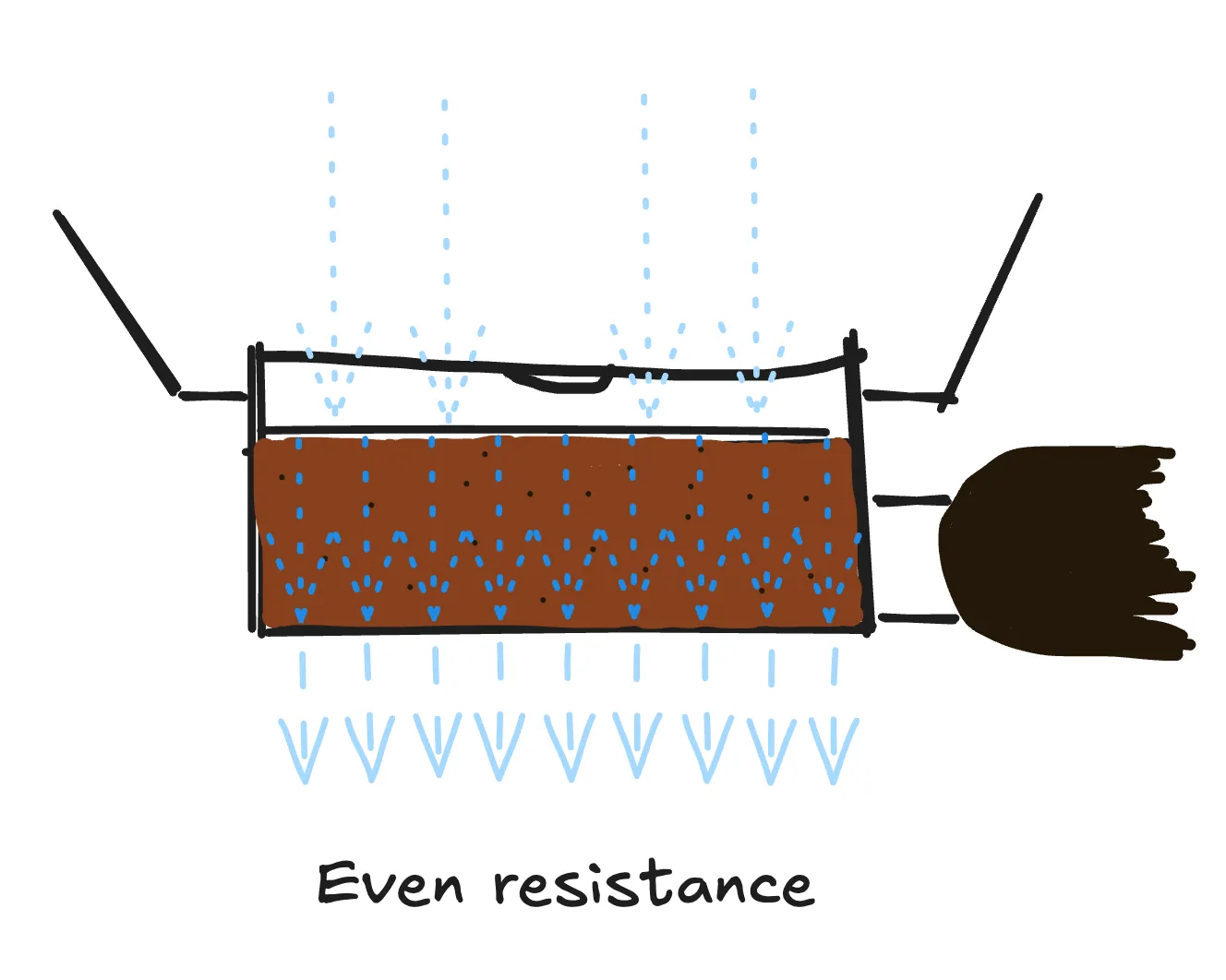
A precision basket solves this by ensuring identical hole dimensions and edge-to-edge hole distribution, allowing water to pass uniformly through the entire coffee bed without funneling.

The result is a much more even extraction from edge to center.
A precision basket offers the opposite: A combination of high consistency size across every hole and a greater number of holes overall, contributing to even resistance across the base of the puck.

Provided all the other variables are covered for (and we shouldn’t understate the importance that the puck itself plays in all of this), a precision basket will contribute to even extraction and a cup of coffee with fewer sour or bitter notes.
The bottom line: Should I buy a precision basket?
The short answer here is yes. If you’re chasing the perfect cup of espresso, then the basket you use will have an impact on the espresso that ends up in the cup and solid precision baskets can be found in the sub $50 range.
There is a caveat to that, however: If you’ve already got a decent stock basket from a reliable manufacturer, then there are other, more impactful purchases that you can make to improve extraction:
- A good espresso grinder
- A WDT tool
Think of this as a checklist, with the grinder being far and away the single biggest factor behind the quality of the espresso you brew.
If you’ve got everything you need to prep perfect pucks, then a precision basket may just be the last bit of espresso equipment you need before you finally make the perfect cup of coffee and stop buying more equipment (for a few days anyway).